Michael Grade: The Man Who Led Britain’s Biggest TV Networks
From a young newspaper reporter to the chairman of the BBC, ITV, Channel 4 and Ofcom, his career tells a remarkable story about British television.

Introduction
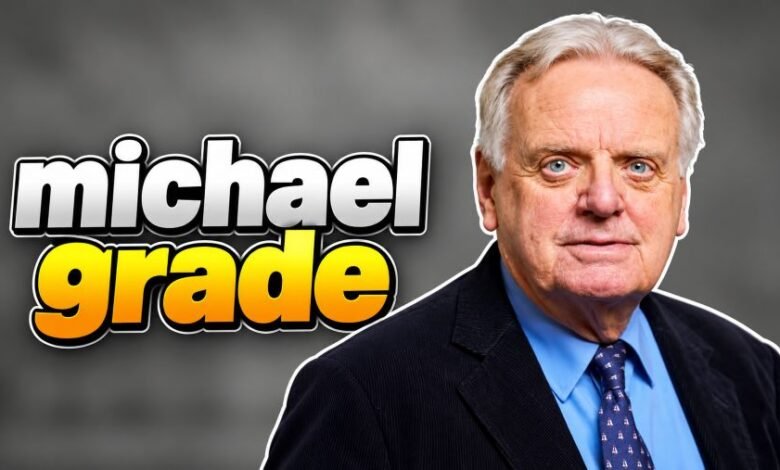
Michael Grade is a British television executive, businessman and member of the House of Lords. He is best known for leading some of Britain’s biggest broadcasting organisations, including the BBC, ITV and Channel 4.
His career started in journalism. Then came television management, major programming decisions and senior boardroom positions.
Some decisions brought praise. Others caused public anger.
He also became chairman of Ofcom, the UK’s communications regulator, in May 2022. His four-year term ended in April 2026.
Born on 8 March 1943, he is 83 years old as of October 2026. His full name is Michael Ian Grade, and his official title is Baron Grade of Yarmouth.
Quick Facts
| Detail | Information |
|---|---|
| Full Name | Michael Ian Grade |
| Known As | Michael Grade, Lord Grade |
| Date of Birth | 8 March 1943 |
| Age | 83 years (October 2026) |
| Birthplace | London, England |
| Nationality | British |
| Profession | Television executive and businessman |
| Father | Leslie Grade |
| Mother | Lynn Smith |
| Famous Uncles | Lew Grade and Bernard Delfont |
| Education | Stowe School and St Dunstan’s College |
| Wife | Francesca Leahy |
| Children | Three |
| Known For | BBC, ITV, Channel 4 and Ofcom |
| BBC One Controller | 1984–1986 |
| Channel 4 Chief Executive | 1988–1997 |
| BBC Chairman | 2004–2006 |
| ITV Executive Chairman | 2007–2009 |
| Ofcom Chairman | 2022–2026 |
| Parliamentary Title | Baron Grade of Yarmouth |
| Honour | CBE (1998) |
| Autobiography | It Seemed Like a Good Idea at the Time |
Who Is Michael Grade?
Michael Grade is one of the familiar names in British television management.
He spent decades making decisions about programmes, broadcasting companies and media businesses.
He was never simply a television presenter. Most of his work happened behind the cameras.
He helped decide what audiences watched.
At BBC One, he worked on programming schedules and new shows. At Channel 4, he managed a broadcaster known for taking creative risks. His later work involved corporate leadership and regulation.
His career eventually took him into Parliament.
In January 2011, he became a life peer in the House of Lords.
Early Life and Family Background
Michael Ian Grade was born in London on 8 March 1943.
Entertainment already ran through the family.
His father, Leslie Grade, worked as a theatrical agent. His uncles, Lew Grade and Bernard Delfont, became major figures in British entertainment.
Lew Grade helped build a career in television production and broadcasting. Bernard Delfont worked in theatre and entertainment management.
The family’s earlier surname was Winogradsky. His paternal family had roots in what is now Ukraine.
Grade’s childhood also included personal difficulties.
His mother, Lynn Smith, left the family while he was young. Published biographical accounts say his paternal grandmother helped raise him.
Growing up around entertainment professionals gave him an unusual introduction to the business.
He could see how the industry worked.
But his first paid career was not in television management. It was in newspapers.
Education and School Years
Grade attended Stowe School in Buckinghamshire and St Dunstan’s College in London.
His professional training came largely through work.
He did not begin with a university management degree. Instead, he entered journalism and learned about media organisations through experience.
That choice mattered later.
He understood newspapers before moving into talent management and television.
Starting His Career in Journalism
In 1960, Grade joined the Daily Mirror.
He worked as a trainee journalist and sports columnist during the early part of his career.
The job demanded quick decisions.
Stories had to be written on time. Reporters needed to understand readers and work under pressure.
Grade stayed with the newspaper until 1966.
Then he changed direction.
He entered theatrical management, working with performers and entertainment businesses.
Between 1969 and 1973, he served as joint managing director of London Management and Representation.
That work gave him direct experience of the commercial entertainment industry.
The First Big Television Job
In 1973, Grade joined London Weekend Television, widely known as LWT.
This became his first major step into television management.
He worked in entertainment programming and later became Director of Programmes.
LWT was an important commercial television company at the time. Its programmes reached audiences across the United Kingdom.
Grade became associated with shows including The Professionals and The South Bank Show.
The work helped build his reputation.
He understood popular television. Yet he also supported cultural programming and serious drama.
That combination followed him through much of his career.
Working in American Television
Grade moved to the United States in 1981.
He became president of Embassy Television, an American production company.
The appointment gave him experience in the US entertainment industry.
American television operated in a highly commercial market, where audience numbers and programme sales carried great importance.
Grade later returned to Britain.
In 1984, he accepted a leading position at the BBC.
This move placed him at the centre of British public service television.
BBC Career and Popular Programmes
Grade became Controller of BBC One in September 1984.
He took responsibility for one of Britain’s best-known television channels.
His work involved programme schedules, commissioning decisions and audience interests.
During his period at BBC One, several important television programmes arrived or gained wider attention.
The Launch of EastEnders
EastEnders began broadcasting in February 1985.
Grade was BBC One Controller when the soap opera launched.
The programme became a major part of British television culture.
Its stories followed families and residents living in a fictional East London neighbourhood.
The show helped BBC One compete for evening audiences.
Bringing Neighbours to British Viewers
The Australian soap opera Neighbours also reached British audiences during Grade’s BBC leadership.
It attracted a large following.
The programme’s mix of family stories, relationships and daily problems helped it find regular viewers.
Supporting Television Drama
Grade’s BBC years also included acclaimed drama.
He supported work by writer Dennis Potter, whose series The Singing Detective appeared in 1986.
The programme became widely recognised for its unusual storytelling and strong performances.
Still, Grade’s programming decisions did not always make viewers happy.
One particular decision became famous.
Why Did He Put Doctor Who on Hold?
In 1985, Grade announced a postponement affecting Doctor Who.
The science-fiction programme already had a loyal audience.
His decision caused anger among fans.
Grade had concerns about production quality and the programme’s direction.
The break lasted around 18 months before the series returned in 1986.
Some viewers saw the decision as an attack on a much-loved BBC programme.
Grade defended his responsibilities as a broadcasting executive.
The controversy followed him for years.
Even today, many Doctor Who fans remember his part in the programme’s history.
Becoming Chief Executive of Channel 4
In January 1988, Grade became Chief Executive of Channel 4.
He remained in the job until 1997.
Channel 4 had a different identity from the BBC.
It was known for programmes that appealed to audiences looking for something less conventional.
Grade worked to increase viewing figures while keeping the channel commercially sustainable.
During his leadership, Channel 4 broadcast popular programmes such as The Word, Eurotrash, Friends and Frasier.
The channel also supported British film and independent television production.
Some programmes attracted criticism because of their content.
The arguments were sometimes intense.
Yet Channel 4 became an important part of British television during his nine years in charge.
The Royal Television Society later reported that the channel’s audience share grew from 8.4% to 10.6% during his leadership.
Moving Into Business Leadership
After leaving Channel 4 in 1997, Grade worked in several commercial organisations.
He held senior positions connected with leisure, film production, retail and other businesses.
One important role involved Pinewood Shepperton, the British film studios group.
He served as its chairman from 2000 to 2016.
He also held leadership positions at Camelot, the former operator of the UK National Lottery, and online grocery company Ocado.
His business experience extended beyond television.
But broadcasting remained a major part of his public identity.
Returning to the BBC as Chairman
In 2004, Grade returned to the BBC.
This time, he became Chairman of the BBC Board of Governors.
It was a different responsibility.
Rather than controlling one television channel, he helped oversee the organisation’s governance and accountability.
The BBC faced questions about its management and future structure.
Grade worked during a period of changes to how the corporation was supervised.
He remained chairman until November 2006.
His next career move surprised many people.
He decided to join ITV.
Why Did He Leave the BBC for ITV?
Grade announced his departure from the BBC in November 2006.
He had accepted a senior position at ITV, one of the BBC’s main commercial competitors.
The decision attracted attention.
Some people questioned the timing because the BBC was dealing with important governance and funding matters.
Grade viewed the ITV opportunity as a professional move.
He became ITV’s Executive Chairman in January 2007.
The company was facing growing financial and programming pressures.
Commercial television was changing.
Advertising income was under pressure, and audiences had more channels to choose from.
Grade supported changes to ITV’s business and programming plans.
But the global financial crisis made the company’s problems harder.
He announced plans to step back from his executive role in 2009.
His period at ITV ended that year.
Business Appointments Outside Television
Grade also worked with organisations outside broadcasting.
His recorded roles included leadership or advisory positions involving:
- Pinewood Shepperton film studios
- Ocado Group
- Camelot Group
- First Leisure Corporation
- The Fundraising Regulator
- Bradford’s National Media Museum
- The GradeLinnit Company
These appointments covered different years.
They should not be confused with his current employment or business interests.
His work with the GradeLinnit Company also connected him to theatre production, returning to the entertainment business familiar to his family.
House of Lords and Public Service
Grade entered the House of Lords in January 2011.
He received the title Baron Grade of Yarmouth.
He initially sat as a Conservative peer.
After his appointment as Ofcom chairman in 2022, he became non-affiliated.
He returned to the Conservative affiliation in May 2026 after leaving Ofcom.
His parliamentary interests have included broadcasting, industry, business regulation and public policy.
His membership of the House of Lords continues in 2026.
Chairman of Ofcom
Grade became chairman of Ofcom on 1 May 2022.
Ofcom is the UK’s communications regulator.
It oversees important areas of broadcasting, telecommunications and online communications.
The chairman’s job involves organisational oversight, board leadership and accountability.
Grade entered the role with decades of broadcasting experience.
His appointment also attracted discussion about his previous connections with commercial television and politics.
His term lasted four years.
It ended on 30 April 2026.
In June 2026, the UK government confirmed Sir Ian Cheshire as his successor.
So Grade should now be described as a former Ofcom chairman, not the current chairman.
Wife and Marriage History
Grade has been married three times, according to published biographical records.
His first wife was Penelope Jane Levinson.
They married in 1967 and divorced in 1981. They had two children.
He married film producer Sarah Lawson in 1982.
Their marriage ended in 1991.
In 1998, he married Francesca Leahy.
Published biographies identify Francesca as his third wife.
Although his professional career has attracted extensive attention, Grade has kept much of his private family life away from regular public discussion.
Does Michael Grade Have Children?
Yes. Michael Grade has three children.
Two are from his first marriage to Penelope Jane Levinson.
He also has a son, Samuel, with Francesca Leahy.
Public information about the children’s personal lives is limited.
There is no need to make assumptions about their careers, relationships or other private matters.
His Father and Famous Uncles
Grade’s family background is an important part of his story.
His father, Leslie Grade, worked as a theatrical agent.
His uncle Lew Grade became a well-known television businessman.
Another uncle, Bernard Delfont, was an important figure in British theatre and entertainment.
The family was already established in the entertainment industry before Michael began his television career.
Still, he developed his own professional record.
He spent decades managing broadcasting organisations and later entered public service.
Awards and Honours
Grade was appointed a Commander of the Order of the British Empire in 1998.
The honour is commonly written as CBE.
He received a life peerage in 2011.
These are among the main official honours associated with his public career.
His broadcasting positions also brought recognition within the television industry.
Books and Autobiography
In 1998, Grade published his autobiography, It Seemed Like a Good Idea at the Time.
The book looks back at his life and professional experiences.
It covers his career in entertainment and television, along with the people and organisations he encountered.
For readers interested in his earlier broadcasting decisions, the autobiography provides his own account of events.
Still, an autobiography is a personal perspective.
Independent reporting helps provide a fuller picture.
Personal Interests and Football
Grade has a long-standing interest in football.
He is known as a supporter of Charlton Athletic.
Published profiles also mention interests such as opera and sailing.
Another familiar part of his public image was his clothing style.
He was often associated with red braces and cigars.
These details became recognisable features of his appearances in the British media.
Net Worth and Salary
Grade has held many senior positions in broadcasting and business.
That naturally leads to questions about his wealth.
However, his current net worth is not reliably confirmed through public financial records.
It would be misleading to give an exact figure without evidence.
Historical company reports and news coverage have disclosed compensation from earlier roles, including ITV.
But past salaries cannot establish a person’s present wealth.
His current net worth should remain unconfirmed unless reliable financial information becomes available.
Where Is Michael Grade Now?
As of October 2026, Grade remains a member of the House of Lords.
His Ofcom chairmanship ended in April 2026.
He returned to the Conservative parliamentary affiliation in May 2026.
At 83, he has already completed a long career that stretches back to his first newspaper job in 1960.
His record includes leadership at four major British broadcasting organisations.
He remains a public figure with a long history in television, business and public service.
Final Thought
Michael Grade began as a young journalist.
He went on to lead some of Britain’s most familiar television organisations.
His career included successful programmes, difficult business decisions and public controversies.
The Doctor Who postponement remains one of his best-known decisions. Yet his professional story covers far more than that single event.
He worked at the BBC, Channel 4 and ITV. Later, he chaired Ofcom and continued his role in the House of Lords.
That is a long career.
And it shows how much British television changed between the 1960s and the 2020s.
Frequently Asked Questions
1. Who is Michael Grade?
Michael Grade is a British television executive, businessman and member of the House of Lords. He previously held senior roles at the BBC, ITV, Channel 4 and Ofcom.
2. How old is Michael Grade?
He is 83 years old as of October 2026. He was born on 8 March 1943.
3. Who is Michael Grade’s wife?
Published biographies identify Francesca Leahy as his third wife. They married in 1998.
4. Does Michael Grade have children?
Yes. He has three children, including his son Samuel.
5. Why is Michael Grade famous?
He is known for leading major British broadcasting organisations and making important television programming decisions.
6. Did Michael Grade cancel Doctor Who?
He postponed the programme in 1985. The decision led to an approximately 18-month break before it returned in 1986.
7. Is Michael Grade still Ofcom chairman?
No. His four-year term ended on 30 April 2026. Sir Ian Cheshire succeeded him.
8. What is Michael Grade’s net worth?
His current net worth has not been reliably verified through public records.