Provascin: Uses, Ingredients, Safety and Current Availability
What the PURICA Provascin supplement contained, what it was marketed for, what research says about its ingredients, and why buyers should check old listings carefully.

Introduction
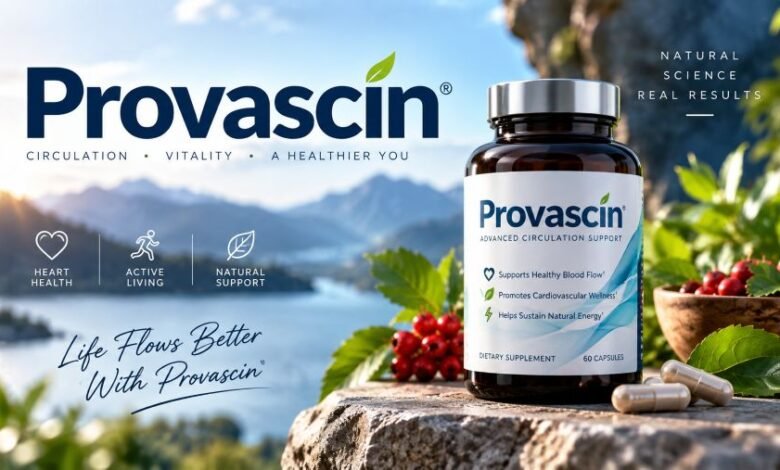
Provascin was a PURICA dietary supplement marketed mainly for heart, circulation, and cardiovascular support. Its historical formula included ingredients such as L-carnitine, CoQ10, Chaga, alpha-lipoic acid, grape seed extract, and green tea extract.
The name can be confusing today. Some newer pages make Provascin sound like a prescription heart medicine, but historical trademark and retail records identify the documented PURICA product as a supplement. The original product also appears to be discontinued, while strong clinical evidence for the complete formula remains limited. Here is what the records, ingredient research, and current availability actually show.
Quick Answer: What Is Provascin?
Provascin was a PURICA dietary supplement marketed mainly for cardiovascular and circulatory support. Its historical formula contained L-carnitine, Chaga, CoQ10, alpha-lipoic acid, grape seed extract, green tea extract, and several other ingredients.
It was not a prescription heart medicine.
The original PURICA product also appears to be discontinued. Major retailers that previously sold it now mark it as discontinued or no longer carried.
Research exists on several individual ingredients, but that does not prove the complete Provascin formula treats high blood pressure, heart disease, or high cholesterol.
Key Takeaway
Provascin was a real supplement with a documented PURICA and trademark history.
The product itself was marketed for heart and circulation support. Still, there is an important difference between supplement marketing and clinical proof.
That difference sits at the centre of this topic.
Quick Facts About Provascin
| Fact | Details |
|---|---|
| Product name | Provascin |
| Brand | PURICA |
| Product type | Dietary supplement |
| Form | Capsules |
| Historical bottle sizes | 120 and 240 capsules |
| Main purpose marketed | Cardiovascular and circulatory support |
| Main ingredients | L-carnitine, Chaga, CoQ10, alpha-ketoglutaric acid, betaine HCl, alpha-lipoic acid, grape seed extract, green tea extract |
| Prescription medicine | No, based on documented PURICA records |
| Trademark owner | The Nutraceutical Medicine Company Inc. |
| FDA-approved heart drug | No |
| Current availability | Major historical retailers now list it as discontinued or no longer carried |
| Product-specific clinical proof | Strong evidence was not found for the complete formula |
What Is Provascin?
Provascin was a supplement sold under the PURICA name.
Historical Canadian retailer pages described it as a formula for heart and cardiovascular support. It was sold in capsule form and appeared in both 120-capsule and 240-capsule bottles.
Government trademark records also support its identity as a supplement.
A Canadian trademark publication shows that The Nutraceutical Medicine Company Inc. filed the PROVASCIN name on January 2, 2003. The listed goods included dietary supplements.
That does not prove the finished product launched in 2003.
It only gives us a documented trademark date.
A later U.S. trademark record also identifies PROVASCIN in connection with dietary supplements.
Sources:
- Government of Canada trademark publication
https://publications.gc.ca/Collection/RG42-2-51-2570.pdf - U.S. trademark record
https://trademarks.justia.com/764/87/provascin-76487464.html
Who Made Provascin?
Provascin was sold under the PURICA brand.
PURICA says it has operated since 1999 and is based in Canada. Its business covers natural-health products, medicinal mushrooms, nutritional formulas, and related supplements.
The PROVASCIN trademark records identify The Nutraceutical Medicine Company Inc. as the trademark owner.
PURICA source:
https://purica.com/pages/our-story
What Ingredients Were in Provascin?
Historical retailer records give a detailed ingredient list.
Provascin Ingredients Per Capsule
| Ingredient | Historical Amount |
|---|---|
| L-Carnitine | 188 mg |
| Alpha-ketoglutaric acid | 125 mg |
| Certified organic micronized Chaga | 125 mg |
| Coenzyme Q10 | 38 mg |
| Betaine hydrochloride | 31 mg |
| DL-alpha-lipoic acid | 13 mg |
| Grape seed extract | 9 mg |
| Green tea extract | 9 mg |
The listed non-medicinal ingredients included:
- Plant-source magnesium stearate
- Microcrystalline cellulose
- Hypromellose
Historical retailer source:
https://www.nationalnutrition.ca/purica-provascin-240-caps.html
These amounts describe the historical PURICA formula.
A current product using the same or a similar name should not automatically be assumed to contain the same ingredients.
Always check the label.
What Does Provascin Do?
Historically, Provascin was marketed for several areas linked with cardiovascular and metabolic health.
Old retailer descriptions mentioned support for:
- Heart health
- Circulation
- Healthy cholesterol
- Glucose metabolism
- Antioxidant activity
- Muscle tissue
- Endurance
- Weight management
- Chronic venous insufficiency
These were marketing claims.
They are not the same as proven treatment effects.
For example, saying Provascin was marketed to support cholesterol health is reasonable.
Saying Provascin has been proven to lower cholesterol would require direct clinical evidence on the finished product.
That evidence is much harder to find.
Does Provascin Really Work?
There is no strong reason to treat Provascin as a clinically proven cardiovascular treatment based only on research involving its individual ingredients.
That is the main evidence issue.
Several ingredients have been studied separately.
But a study on CoQ10 is not automatically a Provascin study.
The same rule applies to L-carnitine.
And Chaga.
And green tea extract.
A good clinical test of Provascin itself would need to study the actual formula, actual doses, a defined patient group, a suitable comparison group, and measurable health outcomes.
The research reviewed for this article did not establish the complete historical Provascin formula as a proven treatment for heart disease, hypertension, or high cholesterol.
What Does Research Say About L-Carnitine?
L-carnitine helps the body move long-chain fatty acids into mitochondria, where they can be used in energy production.
It has been studied in cardiovascular research.
The results are mixed.
The U.S. National Institutes of Health reports that some studies have suggested cardiovascular benefits in certain settings, while other studies have produced weaker or different results.
Research has also examined TMAO, a compound linked with carnitine metabolism, because of possible cardiovascular concerns.
So there is no simple claim that fits every person.
NIH source:
https://ods.od.nih.gov/factsheets/Carnitine-HealthProfessional/
What Does Research Say About CoQ10?
Coenzyme Q10 is naturally present in the body.
It plays a role in cellular energy production.
CoQ10 supplements are often marketed for heart health, but the evidence varies by condition.
The National Center for Complementary and Integrative Health says evidence for preventing heart disease is inconclusive.
Research on heart failure is also not clear enough to support broad claims.
NCCIH also says available evidence suggests CoQ10 probably does not have a meaningful effect on blood pressure.
Source:
https://www.nccih.nih.gov/health/coenzyme-q10
What Does Research Say About Chaga?
Chaga is a fungus known scientifically as Inonotus obliquus.
It has been studied for antioxidant and other biological effects.
Much of that work comes from laboratory or animal research.
Human evidence is far thinner.
Memorial Sloan Kettering also notes safety concerns. Chaga may affect bleeding, and heavy or prolonged consumption has been linked in case reports with kidney problems.
Source:
https://www.mskcc.org/cancer-care/integrative-medicine/herbs/chaga-mushroom
What Does Research Say About Green Tea Extract?
Green tea has been researched for cholesterol, weight management, cardiovascular health, and other areas.
Some studies have found small reductions in total and LDL cholesterol.
That does not mean every green-tea supplement produces the same result.
Concentrated extracts can also cause side effects.
NCCIH lists possible issues such as:
- Nausea
- Constipation
- Abdominal discomfort
- Increased blood pressure in some cases
- Rare liver injury
Green tea may also interact with some medicines.
Source:
https://www.nccih.nih.gov/health/green-tea
Is Provascin a Blood Pressure Medicine?
No reliable evidence found for this article identifies the documented PURICA Provascin product as a prescription blood-pressure medicine.
Its historical records identify it as a supplement.
That is an important point.
Some newer websites use language that makes Provascin sound like a pharmaceutical cardiovascular drug. The historical trademark and retail evidence does not support that description for the PURICA product.
Similar names can create confusion too.
A product name alone is not enough to identify a medicine.
Check:
- Manufacturer
- Active ingredient
- Strength
- Package
- Country
- Regulatory registration
Those details tell you what the product actually is.
Provascin vs Prescription Heart Medicine
| Point | PURICA Provascin | Prescription Cardiovascular Medicine |
|---|---|---|
| Product type | Dietary supplement | Pharmaceutical medicine |
| Main purpose | Historically marketed for cardiovascular support | Used for specific diagnosed conditions |
| Formula | Multiple nutrients and botanical ingredients | Defined active drug ingredient or ingredients |
| Approval standard | Supplement rules apply | Medicine approval or authorisation rules apply by country |
| Evidence | Mainly ingredient-level research | Usually requires drug-specific clinical evidence |
| Replacement for prescribed treatment | No evidence supports using it as a replacement | Used according to medical guidance |
This comparison matters because supplements and medicines do not follow the same evidence and regulatory pathway.
Is Provascin FDA Approved?
Provascin should not be described as an FDA-approved cardiovascular drug.
Dietary supplements are regulated differently from prescription drugs in the United States.
The FDA explains that supplements generally do not go through premarket approval for safety and effectiveness in the same way new pharmaceutical drugs do.
Manufacturers remain responsible for meeting applicable legal requirements.
FDA can act against products that are unsafe, misbranded, or unlawfully marketed.
FDA source:
So “not FDA approved” needs context.
It does not automatically mean “fake.”
It means the product has not passed through the drug-approval process used for approved medicines.
Is Provascin Safe?
No supplement should be assumed safe for every person.
Historical Provascin retail information included several warnings.
Medical advice was recommended for people with certain health conditions or people taking some types of medicine.
The ingredient list also creates possible interaction concerns.
Who Should Be Extra Careful With Provascin?
People in the following groups should not start an old or similar formula without checking with a doctor or pharmacist:
- People taking blood thinners
- People taking blood-pressure medicines
- People taking diabetes medicines
- People using immunosuppressants
- People with liver disease
- People with kidney disease
- People with seizure disorders
- People with autoimmune conditions
- People who are pregnant
- People who are breastfeeding
This does not mean every person in these groups will have a problem.
It means interaction risk needs checking first.
Can Provascin Interact With Medicines?
Yes, some of its ingredients may interact with medicines.
CoQ10 may interact with warfarin and insulin.
Green tea extracts may interact with certain medicines, including some cardiovascular drugs.
Chaga may also affect bleeding risk.
That makes medication review important.
People taking several medicines should be especially careful.
Do not stop prescribed treatment because of a supplement.
What Side Effects Could Provascin Cause?
A reliable product-wide side-effect rate for the historical Provascin formula was not found.
Still, individual ingredients can cause unwanted effects.
Possible concerns linked with ingredients include:
- Digestive discomfort
- Nausea
- Constipation
- Medication interactions
- Changes in bleeding risk
- Liver concerns with concentrated green tea extracts
- Kidney concerns linked with heavy Chaga intake
Individual response can vary.
Dose matters too.
So does duration.
What Was the Historical Provascin Dosage?
Old retailer pages published daily capsule directions for the historical product.
Those instructions are now old.
They should not be treated as current personalised medical advice.
The product appears to have left regular retail sale, and health advice can change over time.
Anyone finding an old bottle should check:
- Expiry date
- Packaging
- Seal
- Storage history
- Ingredient label
- Lot information
- Regulatory information
Using an old webpage as medical dosing advice is not a good plan.
Is Provascin Still Available?
The historical PURICA product appears to be discontinued or no longer routinely carried by major retailers checked.
Vitamart labels PURICA Provascin as discontinued and no longer available.
Source:
https://www.vitamart.ca/products/purica-provascin
National Nutrition also says it no longer carries its historical Provascin products.
Source:
https://www.nationalnutrition.ca/purica-provascin-240-caps.html
This distinction matters because old product pages can stay indexed in search engines long after stock disappears.
A visible page does not mean current stock exists.
Why Was Provascin Discontinued?
A reliable official explanation for why the historical PURICA Provascin product stopped being sold was not found.
So the reason should not be guessed.
Possible business decisions, sales performance, manufacturing changes, formula changes, or regulatory issues should not be presented as fact without evidence.
The safe statement is simple:
Major historical retailers now mark the product as discontinued or no longer carried, but a verified public reason for the change was not found.
Does PURICA Sell a Similar Product Today?
PURICA currently sells Probiotic Cardio.
But it is a different product.
Its formula uses three Lactobacillus plantarum probiotic strains.
The old Provascin formula used ingredients such as L-carnitine, Chaga, CoQ10, alpha-lipoic acid, and plant extracts.
So the two should not be treated as the same formula.
PURICA source:
https://purica.com/products/probiotic-cardio
There is also no good reason to call Probiotic Cardio a direct replacement unless PURICA itself makes that claim.
Is Provascin a Scam?
The historical PURICA Provascin product itself was real.
There are several forms of evidence:
- Government trademark records
- U.S. trademark records
- Historical retailer listings
- Product photographs
- PURICA-related material
So describing the old product as completely invented would be inaccurate.
The bigger issue is current information quality.
Some newer web pages make claims that are hard to trace back to primary evidence.
That includes pages that make Provascin sound like a prescription cardiovascular medicine.
Readers should separate the real historical product from newer unsupported claims attached to the keyword.
Can Provascin Treat High Cholesterol?
There is not enough product-specific evidence to say the complete Provascin formula is a proven treatment for high cholesterol.
Some individual ingredients have been studied for lipid levels.
Green tea is one example.
But ingredient research cannot automatically prove that the finished eight-ingredient product produces the same result.
People diagnosed with high cholesterol should not replace prescribed treatment with an old supplement based on historical marketing claims.
Can Provascin Treat High Blood Pressure?
Reliable evidence does not establish Provascin as a clinically proven treatment for hypertension.
This is especially important because some online content may imply a stronger blood-pressure role than the evidence supports.
NCCIH says available evidence suggests CoQ10 probably does not have a meaningful effect on blood pressure.
So strong blood-pressure claims would be hard to justify.
Can Provascin Prevent Heart Disease?
There is not enough direct evidence to say Provascin prevents heart disease.
Cardiovascular disease has many causes and risk factors.
Prevention can involve:
- Blood-pressure control
- Cholesterol management
- Diabetes care
- Smoking cessation
- Physical activity
- Diet
- Weight management
- Prescribed treatment where needed
A supplement should not be presented as a proven replacement for these measures.
What Should Buyers Check Before Buying Provascin?
If you find Provascin for sale today, check the item carefully.
Look at:
- Manufacturer name
- Full ingredient list
- Expiry date
- Batch or lot number
- Seal condition
- Seller reputation
- Regulatory information
- Storage history, where possible
Old stock can remain online for years.
Marketplace listings can also use outdated photos or descriptions.
Check the actual item.
Final Thought
Provascin was a real PURICA supplement marketed mainly for cardiovascular and circulatory support.
Its historical formula is well documented.
That part is clear.
What needs more care is the health evidence.
L-carnitine, CoQ10, Chaga, green tea extract, and other ingredients have all attracted scientific interest. Still, research on separate ingredients does not prove the complete Provascin formula treats heart disease, high blood pressure, or high cholesterol.
The original product also appears to have left regular retail sale.
So readers searching for Provascin today should separate three things:
the real historical supplement, old marketing claims, and modern web claims.
They are not always the same.
Frequently Asked Questions
What is Provascin?
Provascin was a PURICA dietary supplement marketed mainly for cardiovascular and circulatory support.
What was Provascin used for?
It was historically marketed for heart health, circulation, cholesterol support, glucose metabolism, and related areas.
Is Provascin a prescription medicine?
No. Historical PURICA and trademark records identify the documented product as a dietary supplement.
What ingredients were in Provascin?
The historical formula contained L-carnitine, Chaga, CoQ10, alpha-ketoglutaric acid, betaine HCl, alpha-lipoic acid, grape seed extract, and green tea extract.
Is Provascin FDA approved?
It is not an FDA-approved cardiovascular drug. Dietary supplements follow a different regulatory system from approved medicines.
Does Provascin lower blood pressure?
Reliable product-specific evidence does not establish Provascin as a proven treatment for high blood pressure.
Is Provascin still available?
Major historical retailers now mark PURICA Provascin as discontinued or no longer carried.
Why was Provascin discontinued?
A verified public explanation for the discontinuation was not found.
Is Provascin safe with blood thinners?
Some ingredients may affect bleeding or interact with medicines, so people using blood thinners should check with a doctor or pharmacist before taking similar supplements.
Is Probiotic Cardio the same as Provascin?
No. PURICA Probiotic Cardio uses probiotic strains and has a different formula from historical Provascin.