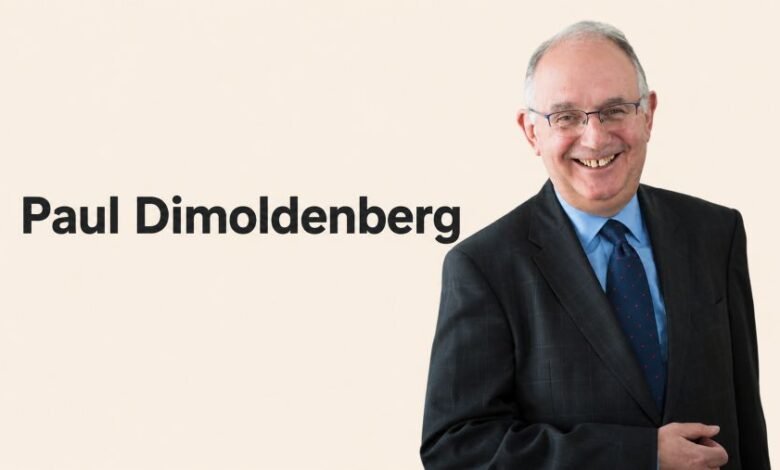
Paul Dimoldenberg: Remarkable 37-Year Public Service Journey
Learn about his age, education, political career, books, family, Westminster service and current professional work.

Introduction
Paul Dimoldenberg is a British politician, author, local historian and communications professional known for his long career in Westminster public life.
He represented three Westminster wards, led the Labour opposition during two separate periods and later became Cabinet Member for City Management and Air Quality. He completed his elected career by serving as Lord Mayor of Westminster from May 2025 to May 2026.
His career combines politics, planning, writing and community service. Readers interested in public questions involving politics, philosophy and law may also find the John Tasioulas profile useful.
Paul Dimoldenberg is best known for his 37 years of elected service on Westminster City Council and his work exposing the Homes for Votes scandal.
Paul Dimoldenberg Quick Facts
| Detail | Information |
|---|---|
| Full name | Paul Howard Dimoldenberg |
| Public name | Paul Dimoldenberg |
| Birth month and year | March 1950 |
| Age | 76 as of June 2026 |
| Birthplace | Manchester, England |
| Nationality | British |
| Profession | Former councillor, author, historian and communications executive |
| Political party | Labour Party |
| Former wards | Harrow Road, Queen’s Park and Hyde Park |
| Former senior office | Lord Mayor of Westminster |
| Mayoral term | May 2025 to May 2026 |
| Business position | Chairman of Quatro Public Relations |
| Wife | Linda Hardman |
| Children | Amelia Dimoldenberg and Zoe Dimoldenberg |
| Known for | Westminster politics, public service and political history books |
Who Is Paul Dimoldenberg?
Paul Dimoldenberg is a long-serving Labour politician who spent much of his public career working within Westminster City Council.
His council service covered different periods between 1982 and 2026. During those years, he represented communities across Harrow Road, Queen’s Park and Hyde Park.
He also became an important opposition figure during periods when the Conservative Party controlled Westminster Council.
Outside politics, he developed a career in communications and public relations. He has also written several books examining British elections, housing policy and Westminster political history.
His career provides an example of how local politics can influence housing, transport, environmental services and everyday community life.
Paul Dimoldenberg Age and Nationality
Paul Dimoldenberg was born in March 1950. He is 76 years old as of June 2026.
His full registered name is Paul Howard Dimoldenberg, and his nationality is British. These details appear in his official Companies House appointments record.
He was born in Manchester before moving to London as a young adult. He later settled in Westminster, where he built both his political and professional careers.
Early Life in Manchester
Paul was born and raised in Manchester.
He attended King David Primary School before continuing his education at Bury Grammar School. He left the Manchester area for London in 1969.
The move became an important turning point in his life. London provided opportunities for further education, local government work and political involvement.
He became a Westminster resident in 1973 and joined the Labour Party in 1974.
These early decisions began a connection with Westminster that continued for more than five decades.
Education and Planning Studies
Paul studied at the Polytechnic of Central London, which later became the University of Westminster.
He completed a Diploma in Social and Environmental Planning. This subject examines how housing, transport, public services and the environment affect communities.
His educational background suited a career in local government because council decisions often involve planning, neighbourhood services and urban development.
Planning knowledge also became useful during his later communications career, particularly when advising organisations working on development and regeneration projects.
Other public figures have also combined education with work that affects communities. The Nicola O’Leary profile explores another career focused on social research and public institutions.
Beginning His Professional Career
Paul began his working life in local government.
He worked for the London Borough of Southwark and the London Borough of Wandsworth before moving into consultancy and communications.
These roles gave him practical knowledge of how councils operate, how public services are delivered and how local decisions affect residents.
His professional experience later included public relations, community engagement, public affairs and communication connected with property and planning.
This combination of government and consultancy work became an important part of his wider public identity.
Joining the Labour Party
Paul joined the Labour Party in 1974.
His political involvement developed during a period of major debate about housing, public ownership, employment and the future of local government.
He became active in Westminster Labour politics and gradually built a reputation as a campaigner focused on council services and neighbourhood issues.
His work was not based only on national political debates. Much of his career concentrated on practical local matters such as housing, roads, waste collection, parking and community facilities.
First Election to Westminster City Council
Paul was first elected to Westminster City Council in 1982.
He represented Harrow Road Ward until 1990. During this first period, he became Leader of the Labour Opposition in 1987.
He remained opposition leader until the end of his first council term in 1990.
Becoming leader gave him greater responsibility for challenging council decisions, presenting Labour policies and coordinating the work of opposition councillors.
It also placed him at the centre of important political disputes involving Westminster’s housing and financial policies.
Return to the Council
Paul returned to Westminster City Council in 1997.
He was elected to represent Queen’s Park Ward, an area he continued to serve until the ward changes introduced for the 2022 election.
His second period on the council lasted much longer than his first.
He became Leader of the Opposition again in 2004 and remained in that position until 2015.
Across both leadership periods, he spent approximately 14 years leading the Labour opposition at Westminster Council.
Work in Queen’s Park
Paul represented Queen’s Park for 25 years.
His local work involved dealing with housing concerns, council services, environmental problems and issues affecting families.
He also developed a long relationship with the Avenues Youth Project, which supports young people in North Paddington and Queen’s Park.
This connection later influenced his decision to select the project as one of his official charities during his year as Lord Mayor.
His ward career showed the importance of long-term local representation and regular contact with residents.
Hyde Park Ward
Boundary changes before the 2022 local elections resulted in Paul standing for Hyde Park Ward.
He was elected in May 2022 and continued representing the ward until the end of his council career in May 2026.
The 2022 election became historic because Labour won control of Westminster City Council for the first time.
Paul had spent most of his council career in opposition. The victory finally gave him an opportunity to take responsibility for running major council services.
Cabinet Member for City Management and Air Quality
After Labour gained control in 2022, Paul became Cabinet Member for City Management and Air Quality.
His responsibilities covered important services used by residents, workers and visitors every day.
These included:
- Waste collection and recycling
- Roads and highways
- Parking
- Parks and trees
- Street cleanliness
- Air quality
- Transport
- Public spaces
- The council mortuary
The position required him to manage both major policies and routine services across one of London’s busiest areas.
He remained in the cabinet role until January 2025.
Focus on Cleaner and Safer Streets
City management is especially challenging in Westminster because millions of residents, workers and tourists use its streets.
Paul’s public work included recycling, electric transport, street cleaning, parking and environmental improvement.
He supported policies intended to make streets safer and cleaner while reducing harmful emissions.
His planning and communications experience helped him deal with different groups, including residents, businesses, transport organisations and council departments.
Profiles such as Will Beckett’s career story also show how London-based leaders must balance business growth with the needs of local communities.
Lord Mayor of Westminster
Paul was elected the 61st Lord Mayor of Westminster on 14 May 2025.
The Lord Mayor is Westminster’s ceremonial First Citizen. The role is separate from the political leadership of the council.
The Lord Mayor represents the city at community events, civic ceremonies, charity programmes and official occasions.
Paul described the appointment as the culmination of his political career. He said it was an honour to represent Westminster’s many communities.
His official career history and mayoral appointment were published by Westminster City Council.
The Walking Lord Mayor
Paul presented himself as the “Walking Lord Mayor.”
He organised and supported walks designed to promote physical health, mental wellbeing, environmental awareness and local history.
The idea matched several of his personal interests. He enjoys walking and has written extensively about Westminster and British political history.
The walking programme also allowed him to meet residents and visit different neighbourhoods.
It gave his mayoral year a clear theme connected with both community wellbeing and the history of the city.
Mayoral Charities
Paul selected two charities to support during his mayoral year.
The first was the Avenues Youth Project, which provides activities and support for young people in Queen’s Park and North Paddington.
He had known the organisation for more than 25 years and had seen its contribution to the local community.
His second charity was Hotel School.
Hotel School provides hospitality training and career support to people who have experienced homelessness and other difficult circumstances.
Both choices reflected his interest in practical support that helps people gain skills and improve their future opportunities.
End of His Mayoral Term
Paul completed his term as Lord Mayor in May 2026.
Councillor Karen Scarborough became the next Lord Mayor of Westminster on 20 May 2026.
At the council meeting, members formally thanked Paul and Lady Mayoress Linda Hardman for their year of service.
The end of his mayoral term also marked the end of his long career as an elected Westminster councillor.
Role in the Homes for Votes Scandal
One of the most important parts of Paul’s political career involved the Westminster Homes for Votes scandal.
The scandal concerned housing policies introduced under the Conservative administration led by Dame Shirley Porter.
Council homes in politically important areas were sold as part of a policy that was later found to be unlawful.
Paul spent years investigating, challenging and publicising the decisions.
His efforts helped keep public attention on both the original policies and the later attempt to recover money connected with the scandal.
He became widely associated with political whistleblowing and the argument that councillors should be able to reveal information when the public interest is at risk.
Standards Case and Public Interest Debate
Paul later faced a standards case after confidential information about the recovery of money from Dame Shirley Porter was provided to the BBC.
He argued that the disclosure was made in the public interest.
A panel found that he had breached the councillors’ code, but no penalty was imposed.
The case became part of a wider debate about whistleblowing, confidential information and freedom of expression in local government.
It also strengthened his public image as a persistent political campaigner willing to challenge powerful institutions.
Paul Dimoldenberg Books
Paul is an author with a strong interest in political and local history.
His books include:
The Westminster Whistleblowers
Published in 2006, this book examines Dame Shirley Porter, the Homes for Votes scandal and the people involved in exposing it.
Cheer Churchill. Vote Labour
This book tells the story of the 1945 general election, when Clement Attlee’s Labour Party defeated Winston Churchill’s Conservatives.
Building the New Jerusalem
The book explores the Attlee government’s post-war housing programme and its effort to build approximately one million homes.
A Sense of Duty
This work focuses on Sir Ashley Bramall and his contribution to education and public service in London.
Winning Westminster
Published in 2023, the book explains how Labour won control of Westminster City Council in the May 2022 election.
His writing connects personal political experience with wider questions about elections, housing, leadership and public accountability.
Winning Westminster
Winning Westminster is particularly connected with Paul’s own political journey.
The book describes Labour’s campaign against a Conservative administration that had controlled the council since Westminster City Council was created.
It examines campaign organisation, political messaging, local concerns and the circumstances that led to the 2022 result.
Paul described it as a mixture of political history, campaign guidance and an inside account of a major local election.
The story may also appeal to readers interested in how journalists explain politics and public affairs, such as those reading the Kamali Melbourne profile.
Communications and Business Career
Alongside politics, Paul developed a long career in public relations and communications.
He is chairman of Quatro Public Relations, a consultancy working in areas including planning, property, infrastructure, regeneration and community engagement.
The company’s work involves explaining projects, consulting local communities and helping organisations communicate with political and public audiences.
His experience in local government gave him an understanding of council processes and the concerns that can develop around major building or regeneration proposals.
His professional record also connects him with several Quatro companies through active corporate appointments.
Paul Dimoldenberg Wife
Paul Dimoldenberg is married to Linda Hardman.
Linda is a retired librarian and supported him during his year as Lord Mayor.
She served as Lady Mayoress of Westminster during the 2025–26 civic year.
The couple live in Marylebone, an area within the City of Westminster.
Paul stated before his retirement that he hoped to spend more time travelling with Linda and returning to his writing projects.
Paul Dimoldenberg Daughters
Paul and Linda have two daughters, Amelia and Zoe Dimoldenberg.
Amelia Dimoldenberg is a presenter, comedian and interviewer best known for creating the online interview series Chicken Shop Date.
Zoe Dimoldenberg works in creative production and has collaborated with Amelia on media projects.
Both daughters supported their father during his mayoral year and were named as consorts when he became Lord Mayor.
Paul has publicly expressed pride in the careers they created through their own ideas and work.
Interests and Personality
Paul has a strong interest in British political history.
His books show particular enthusiasm for elections, housing policy, local government and the Labour movement.
He also enjoys cinema, theatre, Manchester United, jazz and brass-band music.
Walking is another important interest and became the main theme of his mayoral year.
His public career suggests a detailed and persistent working style. He remained involved in Westminster affairs across more than four decades and regularly focused on practical local problems.
Public Image
Paul is generally known as a committed local politician rather than a national political celebrity.
His public image developed through long ward service, opposition leadership, whistleblowing and detailed knowledge of Westminster Council.
Supporters have described him as hardworking and persistent.
His political style often focused on streets, housing, public services and the everyday experiences of residents.
He also used books and public writing to record events that might otherwise have remained mainly within council documents.
Political Values
Paul’s public statements show continued support for Labour values and local public services.
His main political interests have included:
- Affordable and social housing
- Cleaner streets
- Better recycling
- Improved air quality
- Youth services
- Support for vulnerable people
- Stronger community representation
- Public accountability
- Fair access to education and opportunity
His mayoral charity choices also reflected a belief in practical projects that provide training, support and long-term opportunity.
Current Status
As of June 2026, Paul Dimoldenberg is a former Westminster councillor and former Lord Mayor of Westminster.
His elected political service ended after the May 2026 council election.
He remains publicly listed as chairman of Quatro Public Relations.
His future plans include writing, travelling and continuing his interest in politics, planning, communications and Westminster history.
10 Interesting Facts About Paul Dimoldenberg
- His full registered name is Paul Howard Dimoldenberg.
- He was born in Manchester in March 1950.
- He moved to London in 1969.
- He became a Westminster resident in 1973.
- He joined the Labour Party in 1974.
- He was first elected to Westminster City Council in 1982.
- He represented three different Westminster wards.
- He served as Labour opposition leader during two separate periods.
- He has written five books about politics and public history.
- He ended his elected career as Lord Mayor of Westminster.
Frequently Asked Questions
Who is Paul Dimoldenberg?
He is a British former councillor, author, historian and communications executive.
How old is Paul Dimoldenberg?
He is 76 years old as of June 2026.
What is Paul Dimoldenberg’s nationality?
He is British.
Where was Paul Dimoldenberg born?
He was born in Manchester, England.
Which political party did he represent?
He represented the Labour Party.
Who is Paul Dimoldenberg’s wife?
He is married to Linda Hardman.
Who are Paul Dimoldenberg’s daughters?
His daughters are Amelia Dimoldenberg and Zoe Dimoldenberg.
Was Paul Dimoldenberg Lord Mayor of Westminster?
Yes, he served as Lord Mayor from May 2025 until May 2026.
What books has Paul Dimoldenberg written?
His books include The Westminster Whistleblowers, Cheer Churchill. Vote Labour, Building the New Jerusalem, A Sense of Duty and Winning Westminster.
What does Paul Dimoldenberg do now?
He remains chairman of Quatro Public Relations and has expressed plans to travel and continue writing.
Conclusion
Paul Dimoldenberg built an unusually long career in Westminster politics, serving local communities across more than four decades.
His work covered opposition leadership, housing investigations, environmental services, political writing and ceremonial leadership.
The Homes for Votes investigation became one of the defining parts of his public life. His later books helped preserve the history of that scandal and other important moments in British politics.
After completing 37 years of elected council service, he ended his political career as Lord Mayor of Westminster.
His journey reflects persistence, detailed local knowledge and a strong commitment to public service.