Gina Martin: From Upskirting Campaign to Gender Equality Work
The British campaigner became widely known after pushing for a change in upskirting law. Her work now covers gender equality, education, writing, and prevention.

Introduction
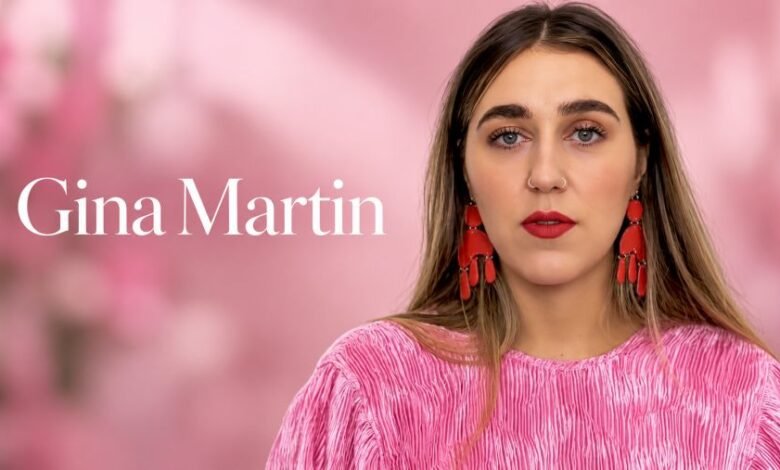
Gina Martin is a British gender-equality advocate, writer, facilitator, and speaker. She became widely known after campaigning for upskirting to become a specific criminal offence in England and Wales.
That campaign started in 2017.
Martin had been targeted by upskirting at a music festival in London. She reported what happened, then learned that the law did not clearly cover the incident in the way many people expected.
She decided to push back.
Working with lawyer Ryan Whelan, MP Wera Hobhouse, campaign supporters, and later the UK government, Martin helped bring national attention to the legal gap.
The Voyeurism (Offences) Act 2019 received Royal Assent on 12 February 2019. The new offences came into force on 12 April 2019.
That remains her best-known public achievement.
But her work did not stop there.
As of September 2026, Martin describes her work around gender equality, gender stereotypes, masculinity, misogyny, online manosphere culture, and prevention of gender-based harm.
Gina Martin Quick Facts
| Fact | Detail |
|---|---|
| Full professional name | Gina Martin |
| Nationality | British |
| Profession | Gender-equality advocate, writer, facilitator, and speaker |
| Best known for | Campaigning for a specific upskirting offence in England and Wales |
| Major law linked to campaign | Voyeurism (Offences) Act 2019 |
| Royal Assent | 12 February 2019 |
| Law came into force | 12 April 2019 |
| First book | Be the Change |
| Second book | No Offence, But… |
| Third book | To Hate and Love Men |
| Major recognition | TIME 100 Next, 2019 |
| BBC recognition | BBC 100 Women, 2019 |
| Current work | Gender equality, prevention education, writing, facilitation, and speaking |
Who Is Gina Martin?
Gina Martin first reached a large public audience through activism.
Before that, she worked around advertising, writing, and social media. Those skills later helped her handle press attention, public messaging, and campaigning.
Her rise into public life was unexpected.
In June 2017, Martin was attending British Summer Time in Hyde Park when an upskirt photograph was taken of her without consent.
She reported the incident.
The experience exposed a problem. Existing legislation did not deal with the behaviour as clearly as she believed it should.
So she started campaigning.
At first, this was not a professional political operation. Martin was working while trying to build public support around the issue.
Media attention grew.
Politicians became involved too.
The Upskirting Campaign
The campaign is the main reason Gina Martin became nationally known.
Upskirting involves taking an image underneath another person’s clothing without their consent.
Martin worked with lawyer Ryan Whelan while arguing that England and Wales needed clearer legislation.
Liberal Democrat MP Wera Hobhouse also became closely involved with the issue and introduced a Private Member’s Bill.
The campaign hit a setback in 2018 when that Bill was blocked during its progress through Parliament.
Still, the issue did not disappear.
The UK government announced support for legislation and introduced a government-backed Bill.
That legislation became the Voyeurism (Offences) Act 2019.
Royal Assent came on 12 February 2019.
The law took effect on 12 April.
Under the legislation, certain forms of upskirting became specific criminal offences in England and Wales.
Serious cases can carry a prison sentence.
The Ministry of Justice publicly acknowledged Martin’s campaigning when discussing the legal change.
Why the 2019 Law Matters
Martin did not work alone.
That point matters.
Her campaign involved lawyers, MPs, campaigners, government officials, victims, charities, and people who publicly supported the proposed change.
Still, Martin became one of the best-known public faces connected with the issue.
Her case also showed how one personal experience could move into public debate, parliamentary action, and eventually legislation.
The story brought Martin international attention.
TIME placed her on its first TIME 100 Next list in 2019.
She was also included in the BBC’s 100 Women list that year.
Gina Martin’s Books
Writing became another major part of Martin’s public career.
She has published three books.
Be the Change
Be the Change: A Toolkit for the Activist in You was published in 2019.
The book draws from campaigning and public action. It looks at ways people can speak up, organise, and work on issues they care about.
It arrived during the same year that the upskirting law came into force.
No Offence, But…
Martin published No Offence, But…: How to Have Difficult Conversations for Meaningful Change in 2023.
The book looks at difficult conversations around social issues.
Its focus is practical.
How do people respond when conversations become tense? How can disagreement be handled without simply shutting everything down?
Those questions run through the book.
To Hate and Love Men
Her third book, To Hate and Love Men, followed in 2024 through The Pound Project.
The work discusses women’s relationships with men alongside wider questions about misogyny and male violence.
It also reflects the direction Martin’s public work had begun taking by this point.
She was talking less about one single law.
The subject had widened.
Work After the Upskirting Campaign
Martin continued campaigning after the 2019 legal change.
One of her better-known later campaigns involved Instagram.
In 2020, model Nyome Nicholas-Williams posted photographs taken by photographer Alexandra Cameron.
Instagram removed some of the images.
Nicholas-Williams, Cameron, and Martin challenged the decision and raised concerns about how the platform’s nudity policy was being applied.
Instagram later changed its policy.
This was a joint campaign.
Martin should not be described as changing Instagram’s rules by herself.
The campaign showed another side of her work: pushing companies and institutions to review policies that affect women.
Shift Toward Prevention and Education
Martin’s work has changed over time.
Actually, she has spoken publicly about that change.
Earlier in her career, criminal-law reform sat at the centre of her most famous campaign.
Later, she began putting more attention on prevention.
That means asking what happens before abuse or harassment takes place.
Her work now discusses gender expectations, masculinity, misogyny, online behaviour, and how young people learn ideas about men and women.
She also works with adults who support young people.
That can include teachers, parents, organisations, and workplaces.
The aim is straightforward: talk about harmful behaviour before it becomes harder to stop.
As of September 2026, Martin’s official professional material describes her as working across writing, facilitation, speaking, and gender-equality education.
She works between Melbourne/Naarm and London.
Gina Martin and the Manosphere
A newer part of Martin’s public work concerns online misogyny and the manosphere.
The term refers broadly to online communities built around discussions about men and masculinity, some of which promote hostile or degrading views about women.
Martin discusses how these ideas reach young people.
She also works on conversations about masculinity itself.
That distinction matters.
The subject is not simply about blaming boys or men. Her work looks at the beliefs, pressures, media, and online material that can shape behaviour.
This has become a bigger part of her prevention work.
Public Recognition
Martin’s public recognition grew quickly after the law campaign.
In 2019, TIME included her in the TIME 100 Next list.
The same year, the BBC included her among its 100 Women.
These honours came after the campaign had moved from a personal incident into national legislation.
Martin was also offered an OBE nomination linked to her work.
She declined it.
She has publicly explained that the decision was connected to her views about the history of the British Empire and her anti-racism commitments.
Gina Martin and Stalking
Martin has also spoken publicly about being targeted by online stalking.
She said she had reported Matthew Hardy, a former schoolmate, to police years before his later prosecution involving other women.
Hardy eventually pleaded guilty to stalking offences involving other victims.
He received a nine-year prison sentence in January 2022. The Court of Appeal later reduced that sentence to eight years.
A detail needs care here.
Martin was not one of the nine victims covered by the prosecution that led to that sentence.
So it would be inaccurate to say Hardy was convicted specifically for stalking Gina Martin.
Her experience still became part of wider reporting about the case and the handling of stalking complaints.
Publicly Confirmed Personal Life
Martin has an older sister, Stevie Martin, who works as a comedian and writer.
The sisters have worked together publicly.
They co-hosted the podcast Might Delete Later, where they talked about social media, online behaviour, and things people later regret posting.
Martin keeps much of her personal life outside her public campaigning work.
Her exact home address, private family details, and unsupported relationship claims should not be treated as public-profile facts.
Gina Martin’s Age
An exact current age should be treated carefully.
Martin wrote in a first-person article that August 2017 marked her 26th birthday.
Some online profile websites publish a different birth year.
Those claims do not match.
No strong primary record located for this profile confirms a precise date of birth.
For that reason, publishing an exact age or birthday as fact would risk repeating incorrect information.
Gina Martin’s Net Worth
There is no reliable public financial record that supports a verified Gina Martin net-worth figure.
Many celebrity-style sites publish estimates.
Those numbers should not be treated as evidence.
Martin earns money through professional work that includes writing, speaking, facilitation, and related projects, but public records reviewed for this profile do not provide enough evidence to calculate her total wealth.
So there is no need to guess.
Current Work in 2026
As of September 2026, Gina Martin remains active as a writer, speaker, facilitator, and gender-equality advocate.
Her public work now covers much more than upskirting.
She works around:
- Gender stereotypes
- Masculinity
- Misogyny
- Online manosphere culture
- Prevention of gender-based harm
- Education involving young people
- Workplace and community conversations
- Writing and public speaking
Her 2019 campaign is still the best-known chapter of her career.
Her current work, though, is mostly about what can happen before harm occurs.
Why Gina Martin Is Still Known Today
The upskirting campaign gave Martin national attention.
The law gave that campaign a lasting result.
Yet her career after 2019 explains why her name continues to appear in conversations about gender equality.
She kept writing.
She kept speaking.
And she changed the focus of her work as her thinking developed.
Rather than staying attached to one successful campaign, Martin moved toward wider questions about education, misogyny, masculinity, and prevention.
That is where much of her current work sits.
Final Thought
Gina Martin is best known for helping push upskirting into UK law as a specific offence.
That happened in 2019.
Her public work now goes further.
She writes, speaks, and runs discussions around gender, masculinity, misogyny, young people, and prevention.
That makes her current profile different from the one many readers first saw during the upskirting campaign.
The law made her widely known.
Her later work explains what came next.
Frequently Asked Questions
Who is Gina Martin?
Gina Martin is a British gender-equality advocate, writer, facilitator, and speaker. She became widely known through the campaign to make upskirting a specific criminal offence in England and Wales.
What is Gina Martin famous for?
She is best known for campaigning for stronger upskirting legislation after being targeted by upskirting at a London music festival in 2017.
Did Gina Martin change the upskirting law?
Martin was a leading public campaigner behind the push for legal reform, working alongside lawyer Ryan Whelan, MP Wera Hobhouse, government officials, and other supporters. The Voyeurism (Offences) Act became law in 2019.
What law is connected with Gina Martin?
The key legislation is the Voyeurism (Offences) Act 2019. It received Royal Assent on 12 February 2019 and came into force on 12 April 2019.
What books has Gina Martin written?
Her published books include Be the Change, No Offence, But…, and To Hate and Love Men.
What does Gina Martin do now?
As of September 2026, she works as a gender-equality advocate, writer, speaker, and facilitator, with a strong focus on prevention, masculinity, misogyny, gender stereotypes, and online influences.
How old is Gina Martin?
A reliable primary source confirming her exact current age and complete date of birth was not established for this profile. Conflicting dates appear online, so an exact age should not be published as confirmed fact.
What is Gina Martin’s net worth?
There is no reliable public financial evidence supporting a verified net-worth figure for Gina Martin. Online estimates from celebrity-profile sites should be treated cautiously.