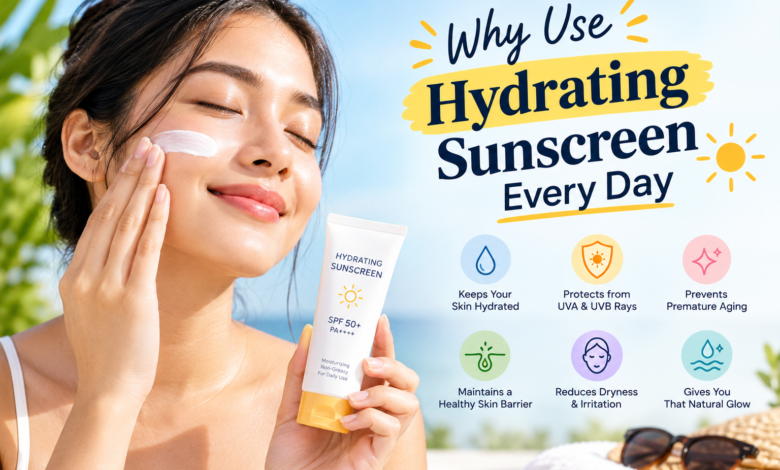
Healthy skin needs both hydration and protection from the sun. While moisturizers help prevent dryness, sunscreen protects your skin from harmful ultraviolet (UV) radiation. A hydrating sunscreen combines these benefits, helping keep your skin comfortable while protecting it from sun damage.
Whether you have dry, oily, or combination skin, using sunscreen daily can be an important part of your skincare routine. UV rays can affect your skin even on cloudy days, so sun protection should not be limited to sunny weather or outdoor activities.
In this article, we’ll explore seven benefits of using hydrating sunscreen every day and explain how to choose the right formula for your skin type.
1. Protects Your Skin From UVA and UVB Rays
One of the main reasons to use sunscreen daily is to protect your skin from ultraviolet radiation.
The sun emits two main types of UV rays that affect the skin:
- UVA rays: These penetrate deeper into the skin and contribute to premature aging, including wrinkles and uneven skin tone.
- UVB rays: These are the primary cause of sunburn and also contribute to skin cancer.
A broad-spectrum sunscreen helps protect against both UVA and UVB rays. The American Academy of Dermatology recommends choosing a broad-spectrum sunscreen with an SPF of 30 or higher.
Hydrating sunscreens offer the added benefit of moisture, which can help reduce the dry or tight feeling some people experience after applying sunscreen. For daily use, choose a formula that provides adequate sun protection and feels comfortable on your skin.
2. Helps Prevent Premature Skin Aging
Fine lines, wrinkles, and uneven skin texture can develop for many reasons, but repeated sun exposure is a major contributor to premature skin aging.
Using sunscreen consistently helps limit UV damage and protect your skin over time. A hydrating formula can also help maintain moisture, leaving your skin feeling softer and looking smoother.
However, hydration alone will not eliminate wrinkles or reverse existing signs of aging. For a more complete skincare routine, combine daily sun protection with gentle cleansing and a moisturizer suited to your skin type.
Consistency matters more than using a large number of skincare products. A simple routine that protects and hydrates your skin can help maintain its healthy appearance.
3. Helps Prevent Dark Spots and Uneven Skin Tone
Dark spots, sunspots, and uneven pigmentation can develop or become more noticeable after repeated sun exposure. UV radiation can also worsen certain existing pigmentation concerns.
Daily sunscreen helps protect your skin from further UV-related discoloration. This can be particularly useful if you have dark spots, acne marks, or an uneven skin tone.
Hydrating sunscreen supports this routine by helping maintain skin moisture while providing sun protection. However, it does not directly remove existing dark spots or acne scars.
If pigmentation is a concern, consider consulting a dermatologist about suitable treatments. A tinted sunscreen may also be worth considering, as products containing iron oxides can provide additional protection against visible light that may worsen some pigmentation conditions.
4. Supports Your Skin’s Moisture Barrier
Your skin barrier is the outermost layer of your skin. It helps retain moisture and protects against external irritants. When the barrier becomes dry or compromised, your skin may feel tight, rough, flaky, or uncomfortable.
Hydrating sunscreens can help support skin moisture by combining sun protection with moisturizing ingredients.
Depending on the formula, these ingredients may include:
- Glycerin: Helps attract moisture to the skin.
- Hyaluronic acid: Helps bind water and improve skin hydration.
- Ceramides: Help support the skin barrier and reduce moisture loss.
- Emollients: Help soften the skin and improve its texture.
Not every sunscreen contains all these ingredients, so check the product label before buying.
Keep in mind that a hydrating sunscreen does not replace every step of skincare. If your skin is particularly dry, you may still need a separate moisturizer underneath your sunscreen.
5. Keeps Your Skin Comfortable Throughout the Day
Some sunscreens can feel heavy, greasy, or drying, making them difficult to use consistently. A hydrating formula may offer a more comfortable alternative, especially if your skin tends to feel dry or tight.
The best sunscreen depends on your skin type and personal preferences.
- Dry skin: A cream-based formula with moisturizing ingredients may be more comfortable.
- Oily skin: A lightweight, non-comedogenic lotion or gel may feel less greasy.
- Sensitive skin: A fragrance-free formula may be a suitable option, particularly if you are sensitive to added fragrance.
Pay attention to how your skin responds after application. If a product causes persistent irritation, stop using it and consider seeking advice from a dermatologist.
The goal is to find a sunscreen that protects your skin without making your daily routine uncomfortable.
6. Can Simplify Your Morning Skincare Routine
A typical morning skincare routine may include cleansing, moisturizing, and applying sunscreen. If your sunscreen also provides enough hydration, you may be able to combine the moisturizing and sun-protection steps.
This can save time and make your routine easier to maintain.
However, whether you can skip a separate moisturizer depends on your skin type and the product you use. If your skin still feels dry after applying sunscreen, continue using a moisturizer before it.
For effective sun protection, apply sunscreen generously to all exposed skin. Reapply approximately every two hours while outdoors and after swimming, sweating, or towel-drying, following the product label.
Remember that makeup or skincare products with SPF may not provide their stated level of protection if you apply too little. Use a dedicated sunscreen as directed rather than relying solely on the small amount of foundation or concealer typically applied.
7. Provides Protection on Cloudy Days Too
It is easy to overlook sunscreen when the sky is cloudy. However, clouds do not block all UV radiation, so your skin can still receive UV exposure even when the sun is not clearly visible.
Daily sunscreen is particularly important when you spend time outdoors, regardless of whether the weather feels hot or sunny.
Your UV exposure depends on several factors, including the time of day, season, location, and amount of time spent outside. Even on cooler days, protecting exposed skin remains worthwhile.
Using a hydrating sunscreen can make daily sun protection easier by combining moisture with broad-spectrum coverage. Making it part of your morning routine helps you avoid relying on the weather to decide whether you need sunscreen.
How to Choose the Right Hydrating Sunscreen
Choosing the right product is just as important as using sunscreen consistently. Consider these factors before making a purchase.
- Choose broad-spectrum protection. Look for a sunscreen that protects against both UVA and UVB rays.
- Select SPF 30 or higher. The American Academy of Dermatology recommends broad-spectrum sunscreen with an SPF of at least 30.
- Match the formula to your skin type. Creams may suit dry skin, while lightweight lotions or gels may be more comfortable for oily skin.
- Look for hydrating ingredients. Glycerin, hyaluronic acid, and ceramides can help support skin hydration, depending on the formulation.
- Consider your skin’s sensitivity. If your skin reacts easily, a fragrance-free product may be a good starting point. Always check the ingredients for known irritants.
- Check water resistance when needed. If you plan to swim or sweat, choose a water-resistant sunscreen and follow its reapplication instructions.
- Use it correctly. Apply enough sunscreen to cover all exposed skin and reapply at least every two hours while outdoors, as well as after swimming, sweating, or towel-drying.
When comparing products, focus on reliable sun protection, suitable ingredients, and a texture you will enjoy using every day. You can explore options for a hydrating sunscreen for your daily skincare routine and compare products to find one that suits your needs.
Frequently Asked Questions (FAQ)
-
Should You Use Hydrating Sunscreen Every Day?
Yes. Daily sunscreen helps protect exposed skin from UV radiation, which contributes to sunburn, premature aging, and certain skin cancers. A hydrating formula also helps maintain skin moisture, making it a convenient option for everyday skincare.
-
Can Hydrating Sunscreen Replace Moisturizer?
Sometimes. If your sunscreen provides enough moisture for your skin, you may not need a separate morning moisturizer. If you have dry skin or still experience tightness, apply a suitable moisturizer before sunscreen.
-
Is Hydrating Sunscreen Suitable for Oily Skin?
Yes. Look for a lightweight, non-comedogenic formula that feels comfortable without leaving excessive greasiness. Gel-based or fluid sunscreens may be suitable, although the best option depends on your individual skin.
-
Do You Need Sunscreen on Cloudy Days?
Yes. Clouds do not block all UV radiation. Applying broad-spectrum sunscreen to exposed skin remains important on cloudy days, especially when spending time outdoors.
-
Does Hydrating Sunscreen Remove Dark Spots?
No. Hydrating sunscreen does not directly remove existing dark spots. However, consistent sun protection can help prevent UV-related pigmentation from becoming darker or more noticeable. A dermatologist can recommend treatments for existing pigmentation concerns.
-
What SPF Is Best for Daily Use?
A broad-spectrum sunscreen with SPF 30 or higher is generally recommended for daily use. Apply it generously and reapply at least every two hours while outdoors, as well as after swimming, sweating, or towel-drying.
Final Thoughts
Hydrating sunscreen combines two important parts of skincare: moisture and sun protection. It can help keep your skin comfortable while protecting it from UV damage, premature aging, and sun-related pigmentation.
The best product suits your skin type, provides broad-spectrum SPF 30 or higher protection, and feels comfortable enough to use consistently. Make it part of your morning routine, apply it correctly, and reapply when needed.
With regular use, hydrating sunscreen can be a simple and effective step toward healthier-looking skin.
READ ALSO: Colorado Squatter’s Rights: What You Need to Know