John Tasioulas Biography: Remarkable Ethics Career
Learn about his early life, education, human rights philosophy, academic career, books and important work in artificial intelligence ethics.

Introduction
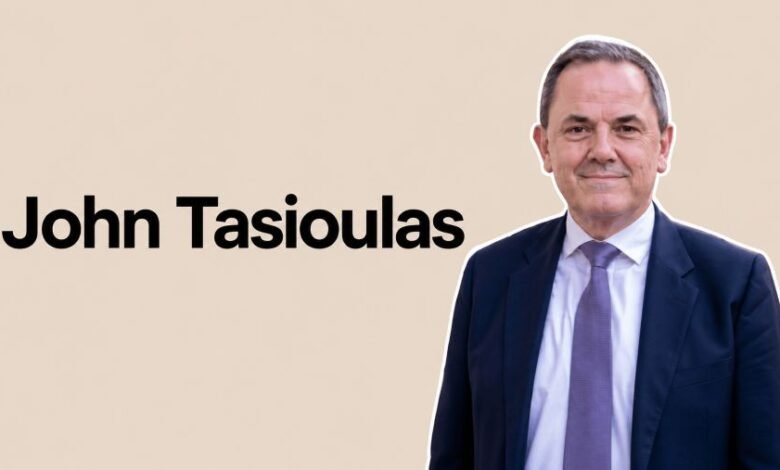
John Tasioulas is an Australian moral and legal philosopher known for his research on human rights, justice, punishment, international law and artificial intelligence.
His career has included senior academic positions at Oxford, University College London, King’s College London and the University of Glasgow. Readers can find more carefully researched public profiles on Blog Mush.
He is best known for connecting traditional moral philosophy with modern questions about law, democracy and ethical technology.
John Tasioulas Quick Bio
| Detail | Information |
|---|---|
| Full name | John Tasioulas |
| Birth year | 1964 |
| Birthplace | Wollongong, New South Wales, Australia |
| Citizenship | Australian |
| Family heritage | Greek |
| Profession | Moral and legal philosopher, academic, writer and speaker |
| Main fields | Human rights, law, punishment, justice and AI ethics |
| Education | University of Melbourne and University of Oxford |
| Qualifications | BA (Hons), LLB (Hons) and DPhil |
| Major scholarship | Rhodes Scholarship for Victoria |
| Doctoral supervisor | Joseph Raz |
| Notable former role | Inaugural Director of Oxford’s Institute for Ethics in AI |
| Notable books | The Philosophy of International Law and The Cambridge Companion to the Philosophy of Law |
| Known for | Human rights philosophy and humanistic approaches to AI ethics |
Who Is John Tasioulas?
John Tasioulas is a philosopher whose research examines the moral purpose of rights, law and public institutions.
His work asks important questions about why human beings possess rights, how punishment should operate and whether mercy can have a proper place within justice.
He has also become an influential voice in debates about artificial intelligence. He believes technology should be judged by its effect on human dignity, freedom, democracy and wellbeing.
His academic journey makes him an important addition to our collection of detailed biographies.
Early Life and Family Background
John was born in Wollongong, New South Wales, in 1964.
His parents, Konstantinos and Elpiniki Tasioulas, moved to Australia from Dasyllio, a village in the Grevena region of northern Greece.
His father worked in several manual and industrial jobs, including construction, steel work, factory work and public transport. His mother trained as a seamstress and worked in clothing and shoe factories.
He has written that his parents made major sacrifices to give their children better educational opportunities.
John became the first person in his immediate family to attend high school and university. This background influenced his interest in fairness, social disadvantage, dignity and opportunity.
His story is also relevant to readers interested in the lives of academic researchers from working-class or immigrant families.
School Education
John attended Northcote High School in Melbourne.
At the age of 14, he gained entry to Melbourne High School, a selective state school. He completed his secondary education there as part of the class of 1982.
He has identified teachers Gary Allen and Mary Bryan as important early influences. They helped develop his interest in economics, literature and serious public questions.
His school years encouraged him to consider education as more than preparation for employment. He became interested in truth, ideas and the moral questions behind social institutions.
University Education
John studied philosophy and law at the University of Melbourne.
He completed a Bachelor of Arts with Honours in 1986 and a Bachelor of Laws with Honours in 1988.
His studies allowed him to combine legal reasoning with deeper questions about morality, rights, responsibility and political authority.
In 1989, the University of Melbourne Rhodes Scholars record named him as a Rhodes Scholar for Victoria in Arts and Law.
The scholarship took him to the University of Oxford. He completed his DPhil in philosophy in 1996.
His doctoral research focused on moral relativism and was supervised by the respected moral and legal philosopher Joseph Raz.
Mentors and Inspirations
Several teachers and academics played an important part in John’s development.
His father strongly encouraged his education and believed that university study should involve a serious search for truth.
At the University of Melbourne, Graeme Marshall encouraged him to apply for the Rhodes Scholarship. Hilary Charlesworth also supported his intellectual development.
At Oxford, Joseph Raz supervised his doctoral research. John has also described philosopher James Griffin as a generous and important mentor.
These influences helped him develop a career that connects abstract philosophical thinking with real legal and political problems.
Career Beginning at Glasgow
John gained a permanent academic position while he was still completing his Oxford doctorate.
He joined the University of Glasgow as a Lecturer in Jurisprudence in 1992.
This was an important early achievement because it allowed him to begin university teaching and research before completing his DPhil.
He remained at Glasgow until 1998. During this period, he developed his expertise in jurisprudence, moral philosophy and the philosophical foundations of law.
Readers interested in another university-based career can also explore the Nicola O’Leary biography.
Academic Career Timeline
| Year | Career development |
|---|---|
| 1964 | Born in Wollongong, Australia |
| 1986 | Completed BA with Honours at the University of Melbourne |
| 1988 | Completed LLB with Honours |
| 1989 | Received the Rhodes Scholarship for Victoria |
| 1992 | Became Lecturer in Jurisprudence at the University of Glasgow |
| 1996 | Completed DPhil at Oxford |
| 1998 | Joined Corpus Christi College and the University of Oxford |
| 2007 | Became Associate Professor at the Australian National University |
| 2008 | Became Reader in Moral and Legal Philosophy at Oxford |
| 2011 | Became Quain Professor of Jurisprudence at University College London |
| 2014 | Joined King’s College London as Yeoh Professor |
| 2020 | Became inaugural Director of Oxford’s Institute for Ethics in AI |
| 2022 | Selected as an AI2050 Senior Fellow |
| 2025 | Left his Oxford directorship |
| 2026 | Continues public work as a philosopher, writer, speaker and consultant |
Career at the University of Oxford
John joined Corpus Christi College, Oxford, as a Fellow and Tutor in Philosophy in 1998.
He taught moral and legal philosophy at Oxford for approximately 12 years. He later held the title of Reader in Moral and Legal Philosophy.
His research during this period included human rights, punishment, moral responsibility, mercy and international law.
He became an Emeritus Fellow of Corpus Christi College after moving to another senior academic position.
University College London
In 2011, John became Quain Professor of Jurisprudence at University College London.
This is a senior academic position connected with the philosophical study of law, legal authority and justice.
At UCL, he continued developing his theories about human rights and the relationship between morality and legal institutions.
His work challenged the idea that human rights should be understood only through their political or international functions.
King’s College London
John moved to King’s College London in 2014.
He became the inaugural Yeoh Professor of Politics, Philosophy and Law at the Dickson Poon School of Law.
He also served as Director of the Yeoh Tiong Lay Centre for Politics, Philosophy and Law.
The centre brought together academics working across legal theory, ethics, political philosophy and public policy.
John remained at King’s until 2020, when he returned to Oxford for a major new leadership role.
Institute for Ethics in AI
In 2020, John became the inaugural Director of Oxford University’s Institute for Ethics in AI.
The official Oxford University announcement said the institute would study ethical challenges involving areas such as facial recognition, voter profiling, employment, medicine and automated decision-making.
John argued that AI ethics should not be treated as an optional or narrow specialist subject.
He believed discussions about artificial intelligence should involve philosophy, law, history, medicine, literature, computer science and democratic public debate.
His leadership helped position human dignity and flourishing at the centre of discussions about technological development.
Why John Tasioulas Is Famous
John is famous primarily for his philosophical work on human rights.
He argues that human rights are universal moral rights possessed by all human beings. They do not exist only because governments, courts or international organisations recognise them.
His theory connects rights with important human interests and equal human dignity.
He is also recognised for his work on punishment, mercy and repentance. His approach suggests that punishment should communicate moral criticism rather than operate only as revenge.
In recent years, his public profile has grown through his writing and speeches about artificial intelligence.
Philosophy of Human Rights
John’s theory of human rights is one of the most important parts of his academic career.
He supports what is sometimes called a moral or orthodox view of human rights.
Under this approach, human rights are grounded in moral values that apply to every person. Their existence does not depend entirely on international treaties or political institutions.
He has also examined how moral human rights should influence international law.
His work considers how dignity, freedom, health and other important human interests can create genuine duties for governments and institutions.
Punishment, Justice and Mercy
Another major area of his research concerns criminal punishment.
John has developed a version of the communicative theory of punishment.
This theory views punishment as a way of expressing justified criticism of wrongdoing. It should encourage offenders to recognise the harm caused by their actions.
However, he does not believe justice must always exclude mercy.
His work explores how mercy, repentance and forgiveness can sometimes exist alongside responsibility and fair punishment.
International Law
John has written extensively about the philosophy of international law.
His research covers the legitimacy of international institutions, state sovereignty, customary international law and crimes against humanity.
He examines why international laws deserve authority and when states have moral duties beyond their own borders.
His work also considers how legal institutions can protect human rights without ignoring questions of democratic legitimacy.
He has worked as a human-rights consultant for the World Bank, including research connected with minimum obligations under the right to health.
Artificial Intelligence Ethics
Artificial intelligence became a major focus of John’s later work.
He argues that AI should not be judged only by speed, profit, efficiency or technical performance.
Technology should also be assessed according to human values. These include dignity, freedom, responsibility, equality and democratic participation.
He has warned that automated systems can weaken human agency when they make important decisions without proper explanation or accountability.
His work supports the idea that people should sometimes have a right to a human decision, especially in areas that deeply affect their lives.
Democracy and the Rule of Law
John connects AI ethics with democracy and the rule of law.
He believes citizens should have a meaningful voice in decisions about how powerful technologies are developed and used.
A fair legal system should not only produce an acceptable final result. It should also explain decisions, allow challenges and treat people as participants rather than objects.
This is particularly important when algorithms are used in policing, employment, healthcare, welfare or the justice system.
His approach encourages governments and technology companies to consider both outcomes and fair decision-making processes.
Books and Major Publications
John co-edited The Philosophy of International Law with Samantha Besson.
Oxford University Press published the book in 2010. It brings together philosophical discussions about sovereignty, international authority, war, human rights and global institutions.
He later edited The Cambridge Companion to the Philosophy of Law, published by Cambridge University Press in 2020.
The book examines central questions about the nature, authority and purpose of law.
His other recognised writings include:
- Mercy
- Punishment and Repentance
- Games and the Good
- The Moral Reality of Human Rights
- Taking Rights out of Human Rights
- Towards a Philosophy of Human Rights
- Human Rights, Legitimacy, and International Law
- First Steps Towards an Ethics of Robots and Artificial Intelligence
- Artificial Intelligence, Humanistic Ethics
- The Rule of Algorithm and the Rule of Law
Awards and Professional Recognition
The Rhodes Scholarship was one of the earliest major achievements in John’s career.
He has also received research support from organisations including the British Academy and the Arts and Humanities Research Council.
He became a member of Academia Europaea, an organisation that recognises academic achievement across Europe.
John has held visiting or research positions at Harvard University, the University of Chicago, the Australian National University and the University of Melbourne.
In 2022, he was selected as an AI2050 Senior Fellow for a project examining human rights in the age of artificial intelligence.
Public Philosophy and Values
John’s public writing presents education as a search for truth rather than only a path towards financial success.
He has also discussed the role of luck, opportunity and family sacrifice in personal achievement.
His own background made him sensitive to unfair disadvantage and the difficulties faced by students from working-class families.
In his AI work, he supports a humanistic approach. This means technology should help people live meaningful and dignified lives.
He also believes democratic debate should guide AI regulation rather than leaving important decisions entirely to technical experts or large companies.
Oxford Departure in 2025
John left his position as Director of Oxford’s Institute for Ethics in AI in September 2025.
Published reporting stated that he resigned while an internal investigation concerning allegations of bullying or harassment was underway.
John publicly denied the allegations and said he was pursuing legal remedies.
No public final university finding or legal judgment was identified by June 20, 2026. The allegations should therefore not be described as proven facts.
Current Status
As of June 2026, John’s public professional profile describes him as a moral and legal philosopher, writer, consultant and speaker based in Sydney, Australia.
He continues to discuss human rights, democracy, law and the social effects of artificial intelligence.
His previous research remains influential in academic discussions about rights, punishment, international law and ethical technology.
His career now combines philosophical writing with public speaking and advisory work.
10 Interesting Facts About John Tasioulas
- He was born in Wollongong, New South Wales.
- His parents moved to Australia from northern Greece.
- He was the first person in his immediate family to attend high school and university.
- He gained entry to Melbourne High School at the age of 14.
- He studied both philosophy and law.
- He received the Rhodes Scholarship for Victoria in 1989.
- Joseph Raz supervised his Oxford doctorate.
- He gained a permanent university lectureship while still completing his doctoral studies.
- He has worked at several leading universities in Australia and the United Kingdom.
- His research connects classical moral questions with modern artificial intelligence.
Frequently Asked Questions
Who is John Tasioulas?
He is an Australian moral and legal philosopher known for research on human rights, justice, law and artificial intelligence ethics.
Where was John Tasioulas born?
He was born in Wollongong, New South Wales, Australia.
When was John Tasioulas born?
He was born in 1964.
What is his nationality?
He is an Australian citizen with Greek family heritage.
Where did he study?
He studied at the University of Melbourne and completed his DPhil at the University of Oxford.
Was John Tasioulas a Rhodes Scholar?
Yes, he received the Rhodes Scholarship for Victoria in 1989.
What is he famous for?
He is famous for his philosophy of human rights and his work on punishment, mercy, international law and AI ethics.
What books has he written or edited?
His notable edited books include The Philosophy of International Law and The Cambridge Companion to the Philosophy of Law.
Conclusion
John Tasioulas has built a notable career by connecting moral philosophy with law, human rights and new technology.
His journey from a Greek-Australian working-class family to senior positions at major universities reflects the importance of education, opportunity and strong mentorship.
His theories of human rights, punishment and mercy have influenced legal and philosophical debates. His later work has also helped place dignity, democracy and human flourishing at the centre of AI ethics.
More researched public profiles can be found in the Blog Mush editorial archive.