Herman Narula: Inside the Career of Improbable’s CEO
The British tech entrepreneur went from studying computer science at Cambridge to building Improbable, raising major investment and backing new businesses across AI, Web3 and virtual-world technology.

Introduction
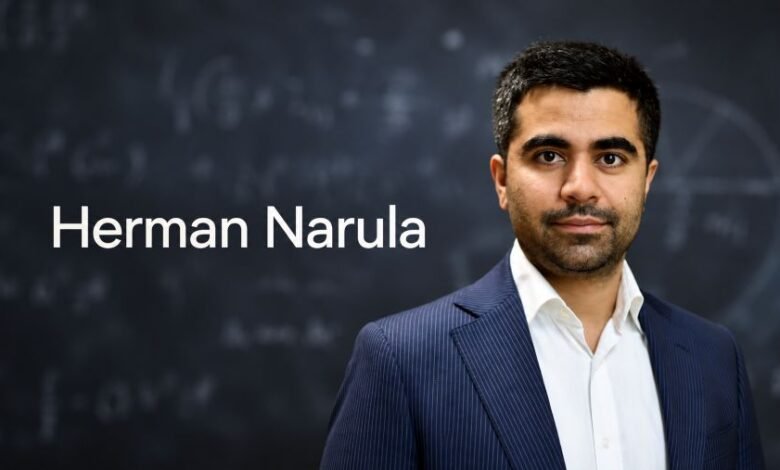
Herman Narula is a British technology entrepreneur, computer scientist and author. He is best known as the co-founder and CEO of Improbable, the UK technology company started in 2012.
His story started with games. It grew far beyond them.
Improbable first became known for technology that could run very large online simulations and virtual environments. Years later, the company changed its business model and began building and investing in companies working across AI, Web3, blockchain and virtual-world infrastructure.
As of September 2026, Narula remains Improbable’s CEO and co-founder. One of his newest public projects is Bolter, an AI-based workplace messaging platform announced in September 2026.
Quick Facts
| Fact | Detail |
|---|---|
| Full Name | Herman Narula |
| Born | April 1988 |
| Age | 38, as of September 2026 |
| Birthplace | Delhi, India |
| Nationality | British |
| Profession | Technology entrepreneur and company executive |
| Education | Computer Science, University of Cambridge |
| College | Girton College |
| Known For | Co-founding Improbable |
| Current Role | CEO and Co-Founder of Improbable |
| Company Founded | Improbable, 2012 |
| Book | Virtual Society |
| Main Work Areas | AI, Web3, blockchain and virtual worlds |
Early Life and Education
Narula was born in Delhi, India, in April 1988.
He moved to Britain during early childhood. Reporting from Forbes says his family relocated while he was still very young.
Computers caught his attention early.
Forbes reported that he taught himself C++ at around age 12. That interest stayed with him through school and later became the base of his professional work.
He attended Haberdashers’ Aske’s Boys’ School before going to the University of Cambridge.
At Cambridge, he studied Computer Science at Girton College. College records place him there from 2007.
This is where things started moving.
He met Rob Whitehead through Cambridge’s Computer Laboratory. Both were interested in multiplayer games and the technical problems created when huge numbers of people share one online environment.
That idea became much bigger.
How Improbable Started
Narula and Rob Whitehead started Improbable in 2012.
Improbable’s own company history says Peter Lipka joined soon after to work on operations and business strategy.
At first, the founders were trying to build a persistent multiplayer game. They ran into technical problems because existing systems struggled with the scale they wanted.
So they changed direction.
Rather than focus only on one game, they worked on technology that could support much larger simulations and online worlds.
Early work was pretty simple in setup. Forbes reported that some of it took place in an unused barn at Narula’s family home.
The idea soon attracted investors.
The Funding That Put Improbable on the Map
In 2015, Improbable raised $20 million from investors including Andreessen Horowitz, Horizons Ventures and Temasek.
Then came a much bigger deal.
In 2017, SoftBank led a $502 million investment round in Improbable. The deal pushed the company’s reported valuation above $1 billion.
That funding made Improbable one of the most closely watched British technology start-ups of that period.
Narula stayed in charge.
Companies House records show that he became a director of Improbable Worlds Limited in July 2012 and remains linked to the company through its public corporate filings.
From Gaming Technology to Virtual Worlds
Improbable’s technology was initially closely tied to games and large simulations.
But the company’s ambitions widened.
Narula regularly spoke about online environments where very large numbers of people could interact, work, trade and share experiences.
He took that argument to TED in 2019 with a talk titled “The transformative power of video games.”
The talk later reached roughly two million plays on TED’s platform.
His ideas about virtual spaces went further in 2022.
That year, he published Virtual Society: The Metaverse and the New Frontiers of Human Experience.
The book discusses how large online worlds could affect economics, communities, identity and human interaction.
The M² and Metaverse Push
Improbable increased its work around metaverse infrastructure in 2022.
The company announced a $150 million funding round linked to the creation of M², later associated with MSquared.
The project focused on technology for connected virtual environments.
This came during heavy public interest in the metaverse.
Still, Improbable did not stay locked into one idea.
Its business changed again.
Improbable’s New Business Model
Improbable now describes itself as a venture builder and technology company.
That is an important change.
Rather than putting all its effort into one platform, the company now builds, backs and spins out smaller businesses.
Its current focus covers AI, Web3, blockchain and related technology.
As of September 2026, the company says its venture portfolio includes 17 businesses and seven exits.
Those figures come directly from Improbable.
The company reported in May 2026 that its exited businesses had produced more than $179 million in total exits.
Bolter and Narula’s Current Work
One of the clearest signs of his current direction came in September 2026.
Improbable introduced Bolter, an AI-native messaging and work platform.
The company backed it with $10 million.
Here is the interesting part.
Narula said he originally coded Bolter himself because he wanted a better way to handle his own work. The personal project later became a business inside Improbable’s venture-building system.
The platform aims to let AI agents handle parts of business communication and work processes.
So his work today is quite different from the early Improbable years.
The link is still there, though. He keeps building software around large systems, people and digital interaction.
Other 2026 Investments
Improbable has also been putting money into outside businesses.
In May 2026, the company announced a $2 million investment in Otomato, a business working on intelligence tools for decentralised finance.
Improbable said the deal matched its growing focus on AI and Web3.
That gives a clearer picture of where the company sits now.
It is part software company, part company builder and part investor.
Herman Narula Net Worth
There is no audited public document giving an exact figure for his personal wealth.
Still, one major estimate exists.
The 2026 Sunday Times Rich List estimated his wealth at £578 million.
That figure was lower than the £780 million estimate reported a year earlier.
These figures should be treated as media estimates.
They are not the same as cash in a bank account.
Much of an entrepreneur’s estimated wealth can come from company shares and other assets whose value can change.
His Ownership of Improbable
Companies House gives a clearer picture of his business control.
Public records list him as a person with significant control over Improbable Worlds Limited.
The filing says he controls more than 25% but no more than 50% of the company’s shares.
It also records 75% or more of voting rights and the right to appoint or remove directors.
Those filings are far more useful than guessing his ownership percentage from old funding stories.
Improbable’s Recent Financial Results
The company’s finances have moved around.
Reporting based on Companies House accounts says Improbable recorded a £12.9 million profit in 2023.
For 2024, it reported a £17.4 million loss.
The latest public accounts available during this research cover the year ending 31 December 2024.
That means readers should avoid treating older revenue or profit figures as current 2026 results.
Planned Move to Dubai
In November 2025, Narula said he planned to move from Britain to Dubai.
He said his businesses would remain in the UK and that he would retain British citizenship.
His comments were tied to his views on UK tax and technology policy.
But the move was not immediately completed.
In May 2026, reporting on the Sunday Times Rich List said he was spending time in Dubai but had not yet completed the relocation.
So it would be inaccurate to state that Dubai is his confirmed permanent residence.
Russia Entry Ban
Narula was included in a Russian Foreign Ministry entry-ban list in April 2024.
The official Russian statement named him among British nationals barred from entering the country.
He later said the action was connected with Improbable’s work on defence simulations linked to Ukraine.
That explanation came from him.
The Russian notice itself listed his name but did not give a detailed individual explanation for every person included.
Recognition and Public Work
Forbes selected Narula and Rob Whitehead for its 30 Under 30 Europe technology list in 2016.
His public profile has since spread beyond company building.
He speaks about gaming, digital economies, artificial intelligence, blockchain and large online communities.
His TED talk and Virtual Society helped bring those ideas to a wider audience.
Still, the company remains the main reason people know his name.
What Makes His Career Different?
His career has changed direction several times.
First came gaming.
Then large-scale simulation software.
After that came the metaverse push.
Now much of the attention is on AI, Web3 and building smaller companies through Improbable.
That pattern explains a lot.
He has kept changing what the company works on as new technology and business opportunities appeared.
Improbable today looks quite different from the company founded in 2012.
He is still leading it.
Final Thought
Herman Narula built his public reputation by trying to solve problems that traditional online games struggled to handle.
That early work became Improbable.
More than a decade later, the company has moved beyond its first mission. It now backs and builds businesses working in AI, blockchain, Web3 and virtual environments.
Narula remains at the centre of that work.
His latest projects suggest he is still interested in the same basic question that shaped his early career: how can software handle much larger and more complex forms of digital interaction?
The tools have changed.
The idea has stayed.
FAQs
Who is Herman Narula?
Herman Narula is a British technology entrepreneur and the co-founder and CEO of Improbable.
How old is Herman Narula?
He was born in April 1988, making him 38 years old as of September 2026.
Where was Herman Narula born?
He was born in Delhi, India, and moved to Britain during early childhood.
What did Herman Narula study?
He studied Computer Science at the University of Cambridge and attended Girton College.
What company did Herman Narula start?
He co-founded Improbable in 2012 with Rob Whitehead. Peter Lipka joined the company soon after.
What is Herman Narula’s net worth?
The 2026 Sunday Times Rich List estimated his wealth at £578 million. It is a media estimate, not a confirmed personal financial statement.
What does Herman Narula do now?
As of September 2026, he remains CEO and co-founder of Improbable, which builds and invests in companies across AI, Web3, blockchain and virtual-world technology.