Masgonzola: What Is This Creamy Cheese Combination?
Masgonzola sounds like a traditional Italian cheese, but the name usually points to a creamy combination of mascarpone and Gorgonzola. Here’s what the term means, how the cheese tastes, and how people use it.

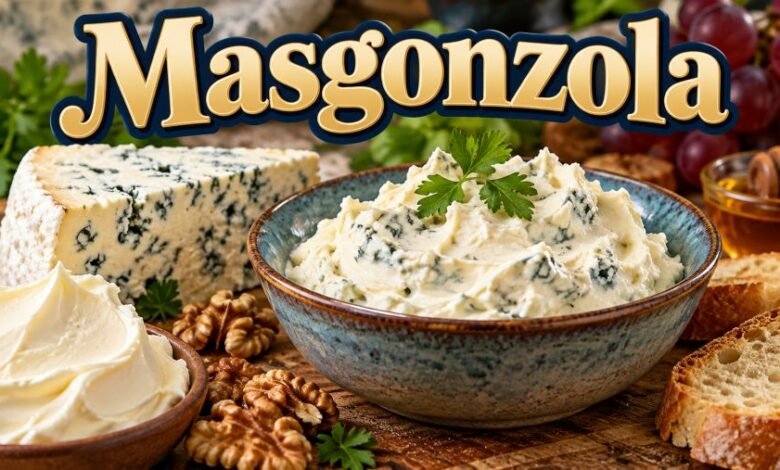
Introduction
Masgonzola is a name that can easily cause confusion.
At first glance, it looks like the name of an old Italian cheese. Search a little deeper, though, and a different picture appears. The term is commonly used online for a combination of mascarpone and Gorgonzola, bringing together one mild, creamy cheese and one stronger blue cheese.
The actual pairing is very real. Italian retailers sell products labelled “Gorgonzola e mascarpone,” although “Masgonzola” itself is not an official protected cheese name.
Quick Facts About Masgonzola
| Detail | Information |
|---|---|
| Name | Masgonzola |
| Usually refers to | Gorgonzola mixed or layered with mascarpone |
| Food type | Soft, creamy cheese preparation |
| Main ingredients | Gorgonzola and mascarpone |
| Texture | Creamy, soft and often spreadable |
| Typical flavour | Mild, buttery, tangy and slightly salty |
| Origin connection | Based on two Italian dairy products |
| Official PDO cheese? | No separate Masgonzola PDO verified |
| Main allergen | Milk |
| Common uses | Pasta, crostini, sauces, risotto and cheese boards |
What Is Masgonzola?
Masgonzola is generally understood as a combination of mascarpone and Gorgonzola cheese.
The idea is simple.
Gorgonzola supplies the recognisable blue-cheese flavour: salty, tangy and aromatic. Mascarpone brings a much softer character, with a rich and creamy consistency.
Put them together and the sharp edge of the blue cheese becomes milder.
Some versions are completely mixed. Others are made with visible layers of mascarpone and Gorgonzola. Commercial products using the two cheeses are sold in Italy, so the underlying food combination is established even though the shortened name “Masgonzola” is less formal.
Where Does the Name Masgonzola Come From?
The most likely explanation is also the simplest.
Mas comes from mascarpone.
Gonzola comes from Gorgonzola.
That creates:
Mascarpone + Gorgonzola = Masgonzola
Recent food articles use the term in exactly this way. However, there does not appear to be an official Italian cheese standard establishing “Masgonzola” as a separate cheese category.
That distinction matters.
A catchy food name can become popular online without becoming an officially recognised agricultural designation.
Is Masgonzola a Real Cheese?
Yes and no.
The Gorgonzola-and-mascarpone combination is certainly real. Italian supermarket Conad, for example, lists a packaged product called “Gorgonzola e Mascarpone.” Another Italian cheese supplier describes a product made by layering Gorgonzola PDO with mascarpone.
But Masgonzola should not be described as a separate historic PDO cheese.
Gorgonzola is different. The official Consortium for the Protection of Gorgonzola Cheese states that Gorgonzola is recognised by the European Union as a Protected Designation of Origin product, with production linked to defined areas in Lombardy and Piedmont.
So a safer description is:
Masgonzola is an informal name for a Gorgonzola-and-mascarpone cheese combination.
What Does Masgonzola Taste Like?
Expect two very different flavours working together.
Mascarpone is mild and rich. Its soft texture helps calm the more noticeable blue-cheese notes coming from Gorgonzola.
Gorgonzola contributes:
- Saltiness
- Tanginess
- Blue-cheese aroma
- Savoury depth
Mascarpone contributes:
- Creaminess
- Mild dairy flavour
- Softness
- A buttery mouthfeel
The result tends to be easier for some people to enjoy than strong blue cheese on its own.
The exact flavour can change considerably depending on how much of each cheese is used.
Masgonzola vs Gorgonzola
Masgonzola and Gorgonzola should not be treated as interchangeable names.
Gorgonzola is an established Italian blue cheese with PDO protection. Its production and use of the name are regulated.
Masgonzola, by comparison, generally describes a preparation combining Gorgonzola with mascarpone.
That means Gorgonzola normally has a stronger blue-cheese personality, whereas the mascarpone in Masgonzola softens both the taste and consistency.
Masgonzola vs Mascarpone
Mascarpone on its own is much milder.
People may know it from creamy dishes and desserts. When paired with Gorgonzola, however, it takes on an entirely different role.
Instead of being the main flavour, mascarpone becomes the creamy base that carries the stronger cheese.
So Masgonzola is not simply another name for mascarpone either.
It relies on both components.
How Is Masgonzola Made?
There is no single official Masgonzola recipe.
That gives producers and home cooks plenty of flexibility.
One method is to soften both cheeses slightly and mix them until the texture becomes smooth.
Another is layering.
A commercial Italian product listed by Valsana describes horizontal layers of Gorgonzola PDO and mascarpone rather than a completely blended mixture.
Either approach can work.
The ratio also changes the result. More mascarpone gives a milder, creamier taste. More Gorgonzola produces stronger blue-cheese notes.
Popular Ways to Use Masgonzola
The soft consistency makes this cheese combination fairly flexible in the kitchen.
Pasta Sauce
Masgonzola can melt into a creamy sauce for pasta.
Because both cheeses already bring richness, a complicated sauce is usually unnecessary. A small amount of pasta water can help loosen the consistency.
Crostini and Toast
Spread it over toasted bread and serve it as a quick starter.
Walnuts, pear or a little honey can add contrasting sweetness and texture.
Risotto
Gorgonzola is already associated with risotto recipes, and the official Gorgonzola Consortium features the cheese in Italian rice dishes.
Adding mascarpone gives the final dish an even creamier texture.
Cheese Boards
A layered Gorgonzola-and-mascarpone preparation can work well on a cheese board because it gives guests something softer than plain blue cheese.
Serve it with bread, crackers, nuts or fruit.
Pizza
Small amounts can be added to pizza after or near the end of baking.
It melts quickly, so a little can go a long way.
Sauces
The combination can also form the base of creamy sauces for vegetables, gnocchi and other savoury dishes.
What Goes Well With Masgonzola?
Strong cheese often works best when paired with ingredients offering sweetness, crunch or freshness.
Common options include:
- Pears
- Figs
- Grapes
- Walnuts
- Honey
- Crusty bread
- Crackers
- Pasta
- Gnocchi
- Risotto
- Roasted vegetables
An Italian specialty-food source specifically recommends a Gorgonzola-and-mascarpone combination with walnut bread and chestnut mostarda.
How Should Masgonzola Be Stored?
Because it is a dairy product, refrigeration is important.
Storage instructions can differ by manufacturer, so the package directions should take priority.
For example, Conad’s Gorgonzola-and-mascarpone product instructs consumers to keep it refrigerated between 2°C and 6°C and, once opened, consume it within three days.
Those instructions apply to that particular packaged product, not automatically to every Masgonzola-style cheese.
Always check the label.
Is Masgonzola Vegetarian?
This depends on the ingredients and cheesemaking process of the particular product.
Do not assume every version is vegetarian simply because it is cheese.
Check the label for information about the rennet and other ingredients if a vegetarian diet matters to you.
Does Masgonzola Contain Milk?
Yes.
Both mascarpone and Gorgonzola are dairy products, so a typical Masgonzola-style combination contains milk.
People with a milk allergy should therefore avoid it unless a specific alternative product clearly states otherwise.
Can You Make Masgonzola at Home?
A simple version can be prepared at home using mascarpone and Gorgonzola.
Start with more mascarpone if you want something mild.
Add Gorgonzola gradually until the flavour reaches the level you like. The cheeses can then be lightly mixed while leaving small blue-cheese pieces visible, or blended into a smoother spread.
There is no need to pretend there is one “authentic” ratio. No universal Masgonzola specification has been established.
Why Has Masgonzola Become a Search Term?
Part of the interest comes from the name itself.
It sounds familiar.
Anyone who already knows Gorgonzola may reasonably wonder whether Masgonzola is another Italian cheese they have not heard about.
That curiosity has led to articles offering different explanations. Some accurately connect the word with mascarpone and Gorgonzola, while others treat Masgonzola more loosely as a made-up or internet term.
The safest approach is therefore to separate verified food facts from assumptions about the name.
Is Masgonzola the Same Everywhere?
No.
There is no universal formula attached to the term.
One product may use visible layers. Another may blend both cheeses together. One may taste strongly of Gorgonzola, while another may be much milder because it contains more mascarpone.
Packaging may not even say “Masgonzola.”
Look for descriptions such as:
Gorgonzola e mascarpone
Gorgonzola with mascarpone
or
Gorgonzola-mascarpone cheese
These descriptions may lead to the same general style of product.
Final Thought
Masgonzola is easier to understand once the name is broken down.
It is best viewed as an informal name for the pairing of mascarpone and Gorgonzola, not as another centuries-old Italian cheese variety. The combination itself is genuine and commercially available, with creamy mascarpone softening the salty, tangy character of Gorgonzola.
The important distinction is official status. Gorgonzola is PDO-protected; Masgonzola has not been verified as a separate protected designation.
For cooks, that technical difference does not stop the pairing from being useful. Spread it on bread, melt it into pasta, stir it through risotto or put it on a cheese board. Simple.
Frequently Asked Questions
What is Masgonzola?
Masgonzola is generally used as an informal name for a combination of mascarpone and Gorgonzola cheeses.
Is Masgonzola an Italian cheese?
Its two main components are Italian cheeses, but Masgonzola itself has not been verified as a separate official Italian PDO cheese.
What does Masgonzola taste like?
It is usually creamy, rich, tangy and mildly salty. The mascarpone softens the stronger blue-cheese taste of Gorgonzola.
What is Masgonzola made from?
It is typically made from mascarpone and Gorgonzola. Products may mix the cheeses or place them in separate layers.
Is Masgonzola the same as Gorgonzola?
No. Gorgonzola is a PDO-protected Italian blue cheese. Masgonzola generally refers to Gorgonzola combined with mascarpone.
Can I use Masgonzola in pasta?
Yes. Its creamy texture makes the combination suitable for pasta sauces, gnocchi and similar dishes.
Can you buy Masgonzola?
Products combining Gorgonzola and mascarpone are commercially available, although they may be sold under names such as “Gorgonzola e mascarpone” rather than Masgonzola.
Does Masgonzola contain dairy?
Yes. A standard Masgonzola-style preparation contains mascarpone and Gorgonzola, both of which are dairy products.