Richard Dearlove: The Former MI6 Chief Who Led Britain’s Secret Intelligence Service
From a 38-year intelligence career to Cambridge and public security work, Sir Richard Dearlove has spent decades inside and around British foreign affairs.

Introduction
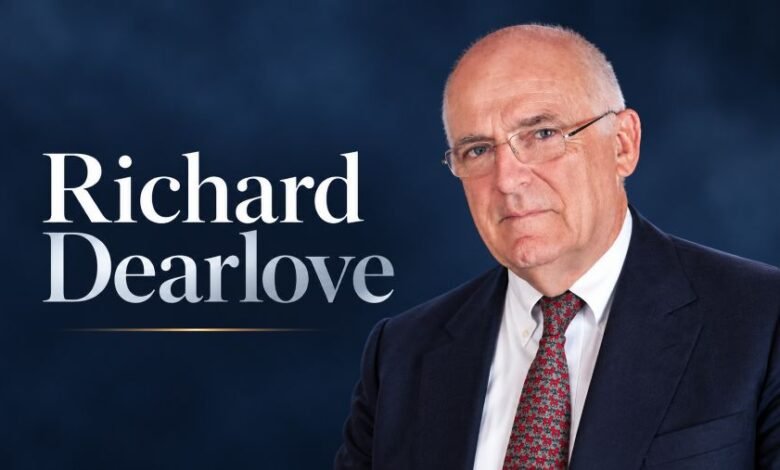
Richard Dearlove is a British former intelligence officer best known for serving as Chief of the Secret Intelligence Service, better known as MI6, from 1999 to 2004. His time at the top covered 9/11, the Afghanistan war and the build-up to the 2003 Iraq invasion.
He later moved into university leadership.
Today, he remains active in security circles. As of October 2026, he serves as Chair of the Cambridge Security Initiative and continues to speak publicly about intelligence, defence and international affairs.
Quick Facts
| Detail | Information |
|---|---|
| Full name | Sir Richard Billing Dearlove |
| Born | January 1945 |
| Birthplace | Gorran Haven, Cornwall, England |
| Nationality | British |
| Profession | Former intelligence officer |
| Best known for | Serving as Chief of MI6 |
| MI6 chief | 1999–2004 |
| Education | Queens’ College, Cambridge |
| Former academic role | Master of Pembroke College, Cambridge |
| Current role | Chair of the Cambridge Security Initiative |
| Honours | KCMG, OBE |
Who Is Richard Dearlove?
Sir Richard Dearlove spent most of his working life in British intelligence.
That is his main public story.
He joined the Secret Intelligence Service in 1966 and stayed for nearly four decades. His work took him through several overseas postings before he moved into senior management jobs in London.
Then came the top job.
Dearlove became Chief of SIS in August 1999. The chief of MI6 is traditionally known inside the service as “C.”
He remained in the post until 2004.
After leaving government service, his career changed direction. He entered university life, took on board positions and kept working around defence and intelligence issues.
Early Life and Education
Dearlove was born in Gorran Haven, Cornwall, in 1945.
He studied at Monkton Combe School near Bath. He also attended Kent School in Connecticut in the United States.
Later, he studied at Queens’ College, Cambridge.
Queens’ College records place him there from 1963 to 1966.
Years later, the college elected him an Honorary Fellow in 2004.
His connection with Cambridge would become even stronger after he left MI6.
Richard Dearlove and His MI6 Career
Dearlove joined MI6 in 1966.
His intelligence career lasted about 38 years.
Public institutional records show overseas postings in Nairobi, Prague, Paris, Geneva and Washington.
Those assignments gave him experience across Europe, Africa and the United States.
He later moved into senior roles.
In 1991, he became head of the SIS station in Washington.
Two years later, he became Director of Personnel and Administration.
In 1994, he became Director of Operations.
That same period included another major organisational task. Dearlove was involved in overseeing the service’s move into its headquarters at Vauxhall Cross in London.
By 1998, he had become Assistant Chief.
Then came 1999.
He was appointed Chief of MI6.
Leading MI6 From 1999 to 2004
Dearlove took control of Britain’s foreign intelligence service during a tense period in world affairs.
The 9/11 attacks happened in September 2001.
Britain then joined military operations in Afghanistan.
Iraq soon became another major issue.
MI6 collects foreign intelligence for the British government. During Dearlove’s years as chief, intelligence about Iraq’s weapons programmes became part of the case surrounding the 2003 invasion.
That period later received heavy public and official examination.
Dearlove retired from MI6 in 2004.
His retirement ended a career that had started back in 1966.
Richard Dearlove and the Iraq Intelligence Debate
Dearlove’s name is closely linked with the intelligence history surrounding the Iraq War.
This needs careful wording.
The Iraq Inquiry later examined how British intelligence on Iraq’s suspected weapons of mass destruction was collected, assessed and presented before the 2003 invasion.
The inquiry found serious problems in that process.
It said assessments about Iraq’s capabilities were presented publicly with greater certainty than the evidence supported.
Dearlove was MI6 chief during that period.
His evidence and SIS reporting became part of the inquiry’s record.
That does not mean every intelligence decision was his alone. Britain’s Iraq policy involved intelligence agencies, government departments, ministers and wider decision-making structures.
Still, the Iraq period remains one of the most closely examined parts of his time at MI6.
Life After MI6
Dearlove did not disappear from public life after 2004.
His next major role was very different.
He became Master of Pembroke College, Cambridge.
He held that position from 2004 until July 2015.
This gave him a long second career inside one of Britain’s best-known universities.
He also continued speaking about national security, intelligence and foreign affairs.
Master of Pembroke College
Pembroke College appointed Dearlove as Master after his retirement from MI6.
He remained there for more than a decade.
His term ended on 31 July 2015.
Lord Smith of Finsbury succeeded him.
The move from intelligence leadership to college leadership may look unusual, but Dearlove already had strong links with Cambridge through his earlier education at Queens’ College.
He also remained involved in discussions around international affairs and security.
University of London Role
Dearlove later served as Chair of the University of London Board of Trustees.
He held the position for around ten years.
That job has now ended.
This point matters because some older online profiles still describe him as the university’s current chair.
They are outdated.
Dearlove stepped down in 2024.
The University of London’s present Board of Trustees is chaired by Kavita Reddi.
So, any new article should describe the University of London position as a former role.
Cambridge Security Initiative
Dearlove now has a major role with the Cambridge Security Initiative, often shortened to CSi.
He serves as its Chair.
The organisation works around intelligence, security, defence and foreign-policy education.
It brings together people from government, academia, business and the wider security field.
UK Charity Commission records also list Dearlove as Chair.
His appointment dates back to May 2017.
This remains one of his clearest current public positions as of October 2026.
Current Work in 2026
Dearlove still appears in discussions about international security.
His public subjects include Russia, China, European security, NATO, terrorism and intelligence cooperation.
He has also given evidence to Parliament.
In February 2023, he appeared before the UK Parliament’s Foreign Affairs Committee during discussions about Britain’s security relationship with the European Union.
His public work has continued since then.
In 2025 and 2026, he appeared in international discussions and interviews covering Russia, China and European defence.
There was another appointment in 2026.
In July, Pattern Computer announced that Dearlove had joined its Advisory Board.
The company said his experience would support work related to geopolitical and strategic risk.
Honours and Recognition
Dearlove received an OBE in 1984.
He was later appointed Knight Commander of the Order of St Michael and St George, commonly written as KCMG, in 2001.
That is why his formal name is often written as:
Sir Richard Dearlove KCMG OBE
The University of Exeter also awarded him an honorary LLD in 2007.
Queens’ College made him an Honorary Fellow in 2004.
Other Public Roles
Public company records show Dearlove has held or continues to hold several organisational positions.
Companies House records list him in connection with the Cambridge Security Initiative.
He has also served as a director of the Cambridge Arts Theatre Trust.
These positions fit the pattern of his post-MI6 work.
Much of it sits between education, public affairs, security and institutional leadership.
Interests Outside Intelligence
An institutional profile published by the University of Exeter records several personal interests.
These include painting, fly-fishing and rowing.
Rowing has a Cambridge connection too.
Dearlove has been involved as a coach and has also rowed himself.
Reliable public information about his wider private life is limited, so there is little reason to stretch this part of his story.
The better-documented material is his professional record.
Why Richard Dearlove Remains a Public Figure
Dearlove left MI6 more than two decades ago.
Yet his name still appears in security debates.
There is a simple reason.
He led Britain’s overseas intelligence service through a period that changed global security policy: 9/11, Afghanistan and Iraq.
His later work kept him close to the same subjects.
He moved into Cambridge life, university governance and security education rather than leaving public affairs completely.
So his public story has two clear halves.
First came intelligence.
Then came education and security commentary.
Final Thought
Richard Dearlove spent 38 years inside British intelligence and five years as Chief of MI6.
That alone makes his career historically notable.
His years at the top included some of the hardest foreign-policy questions Britain faced in the early 2000s. The Iraq intelligence debate remains part of that record and should be discussed carefully, using official findings rather than loose claims.
After MI6, Dearlove built a long second chapter around Cambridge, university governance and security work.
As of October 2026, he remains Chair of the Cambridge Security Initiative and continues to take part in public debate on intelligence and international security.
Frequently Asked Questions
Who is Richard Dearlove?
Richard Dearlove is a former British intelligence officer who served as Chief of MI6 from 1999 to 2004.
When was Richard Dearlove head of MI6?
He became Chief of the Secret Intelligence Service in August 1999 and retired in 2004.
What does “C” mean in MI6?
“C” is the traditional title used for the Chief of the Secret Intelligence Service.
Where did Richard Dearlove study?
He studied at Queens’ College, Cambridge, after attending Monkton Combe School and Kent School in Connecticut.
Was Richard Dearlove Master of Pembroke College?
Yes. He became Master of Pembroke College, Cambridge, in 2004 and remained in the role until July 2015.
What does Richard Dearlove do now?
As of October 2026, he is Chair of the Cambridge Security Initiative. He also remains active in public discussions on intelligence, defence and foreign affairs.
Was Richard Dearlove involved in the Iraq War period?
Yes. He was Chief of MI6 during the build-up to the 2003 Iraq invasion. The later Iraq Inquiry examined intelligence work from that period, including SIS reporting.
What honours has Richard Dearlove received?
He received an OBE in 1984 and was appointed KCMG in 2001. He also received an honorary LLD from the University of Exeter in 2007.